Solar charging meets car charging

EV charging pods need serious math.

A solar tracking pod can look perfect beside an EV charger, but the car is hungry. Real EV charging requires load planning, charge speed expectations, batteries, inverter capacity, utility service, safety equipment, and honest solar production modeling.
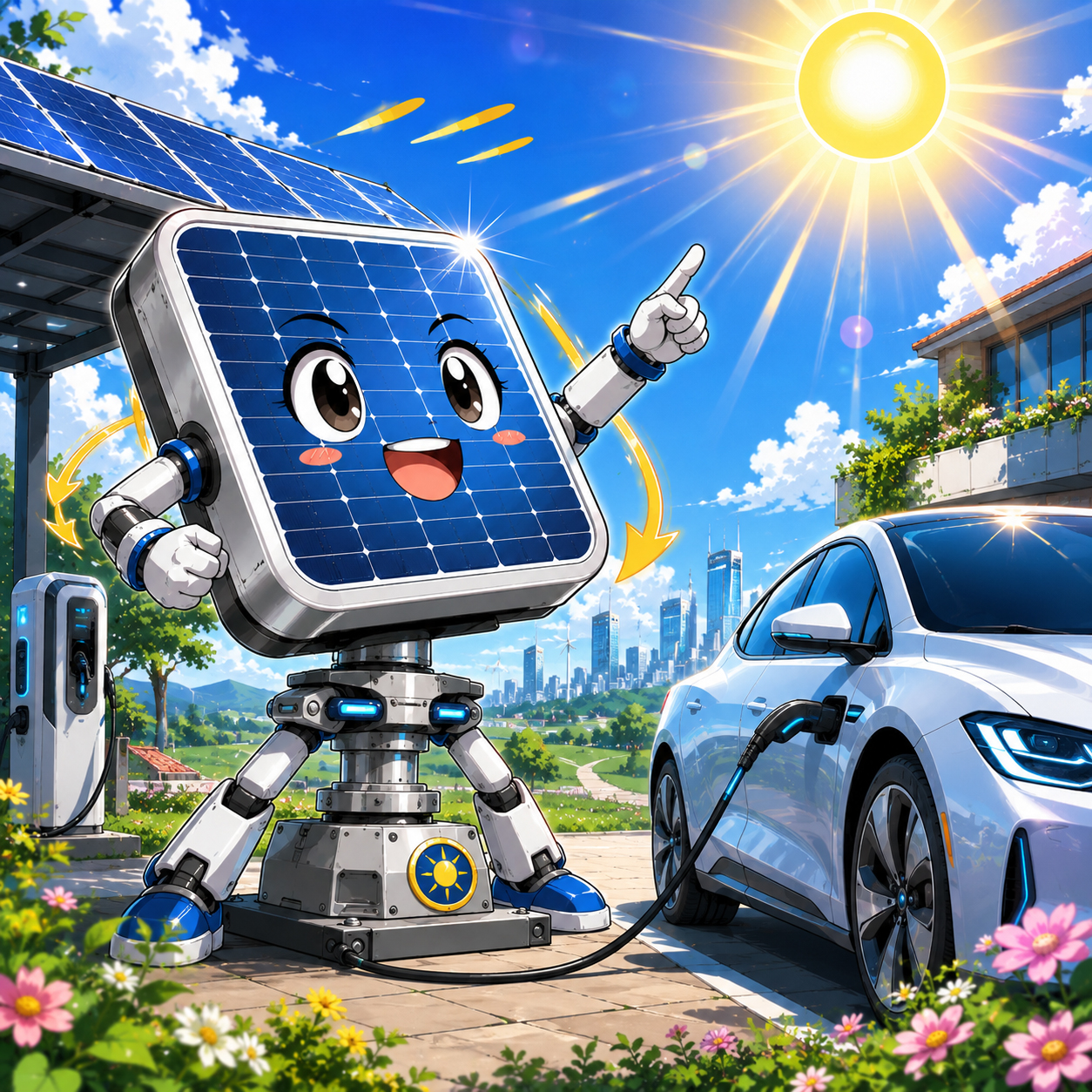
Solar tracking pod charging an electric vehicle
PLUG
IN!

The EV is the hungry character.

Solar Pod Boy can feed an EV, but not by wishing. EV charging is defined by energy, power, timing, and expectations.

Energy

EV charging is measured in kilowatt-hours. The more miles expected, the more solar and storage must be planned.

Power

Charging speed depends on kilowatts. Faster charging needs larger electrical capacity and more serious equipment.

Timing

If cars charge during sunny hours, solar can help directly. If charging happens at night, batteries or the grid carry the load.

Control

Smart charging, load management, battery state, and utility limits often matter more than the cartoon drama of a moving panel.

The pod can help when charging follows the sun.

Solar tracking becomes more interesting when the EV charging session lines up with useful daylight. If the car is gone all day and charges at night, the design becomes a battery or grid-tied problem.

  • Daytime workplace charging may fit solar better.
  • Fleet charging needs scheduling and load management.
  • Home nighttime charging usually needs grid or battery support.
  • Off-grid charging needs much more storage discipline.
Solar tracking pod with EV charging station

Three EV charging pod designs.

The same artwork can represent three very different engineering realities.

Choose the charging lane

Grid-tied solar assist Solar offsets some EV charging energy, but the grid supports charging when solar is not enough.
Solar + battery support Solar charges a battery, and the battery helps manage charging time, peak demand, or backup needs.
Off-grid charging concept Solar and batteries must carry the whole mission. This requires conservative design and realistic charging expectations.

“Solar EV charger” can mean very different things.

A small solar pod may demonstrate clean charging, but full EV charging can demand far more energy than people expect. Always define whether the system offsets energy, supports charging, or fully powers charging.
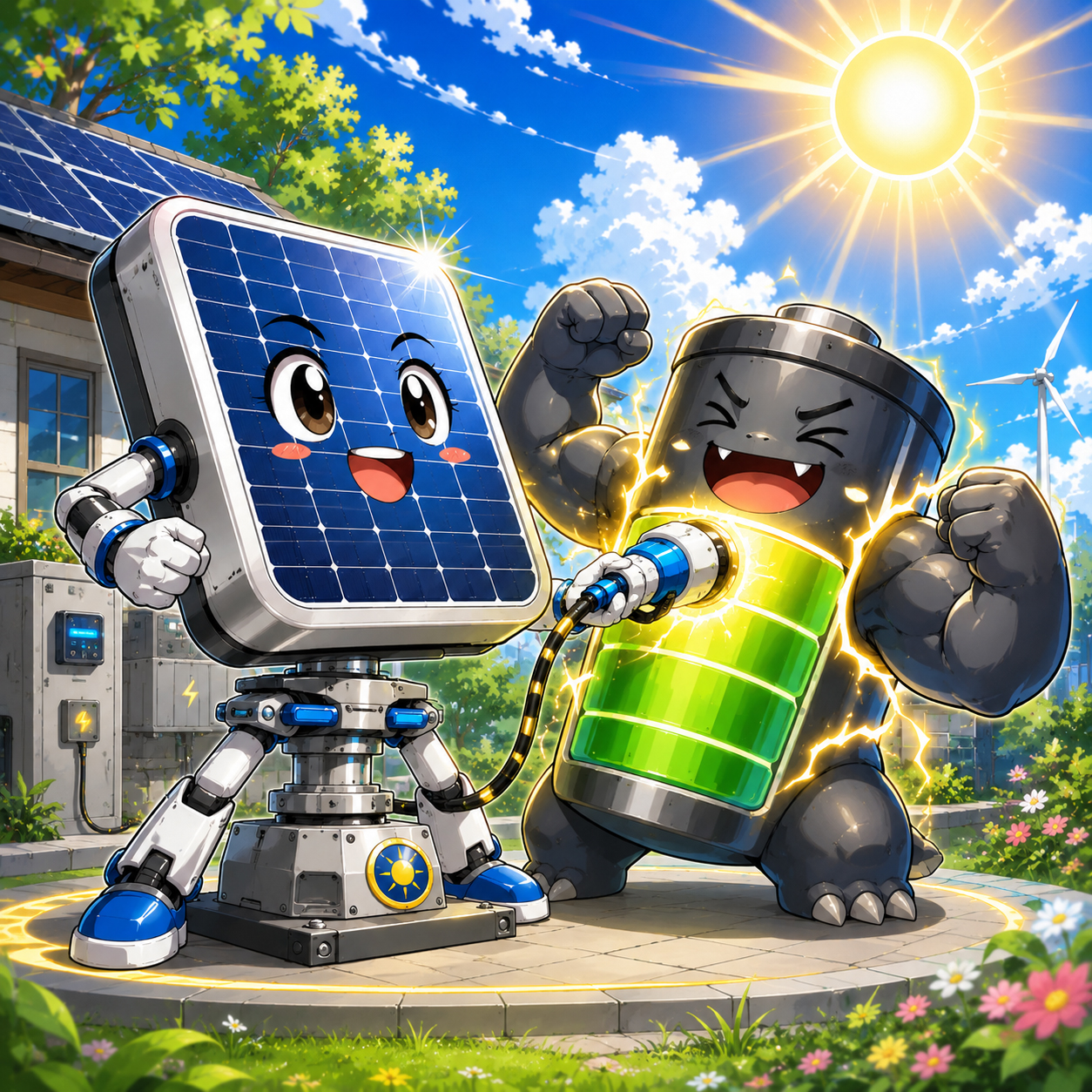
Battery Beast charging from solar tracking pod

Battery Beast often stands between the sun and the car.

Batteries can store daytime solar for later EV charging, reduce peak demand, or support limited backup charging. But batteries add cost, code requirements, capacity limits, and safety obligations.

  • Battery size must match the charging mission.
  • Inverter capacity limits charging speed.
  • Charging at night requires stored energy or grid energy.
  • Battery fire code, spacing, and equipment rules matter.

Where EV charging pods may fit.

EV charging pods are strongest as planned systems, not random solar gadgets next to a parking space.

Good-fit situations

  • Daytime workplace charging.
  • School or campus demonstration charging.
  • Ranch, farm, or remote property charging support.
  • Low-speed fleet charging with predictable schedules.
  • Solar-plus-battery education and outreach projects.
  • Sites where utility upgrades are expensive and load management is useful.

Hard-fit situations

  • Fast charging expectations from a small solar pod.
  • Nighttime-only EV charging without battery storage.
  • High-traffic public charging without grid support.
  • High-wind sites without engineered tracking hardware.
  • Projects where maintenance access is ignored.
  • Any design that promises “free charging” without a real energy model.

Fixed solar may beat the pod.

For many EV projects, a larger fixed solar canopy or rooftop system may be more practical than a moving tracking pod.

  • Fixed canopies shade cars and generate power.
  • Fixed rooftop solar is simpler and proven.
  • More fixed panels can outperform fewer tracking panels.
  • Maintenance and permitting may be easier.
  • Tracking must prove it improves the charging mission.
Fixed Tilt Sensei solar manga character

Questions before building.

Before the manga becomes equipment, answer the practical questions.

Charging questions

  • How many vehicles charge per day?
  • How many miles or kWh are needed per vehicle?
  • What charging speed is expected?
  • Will charging happen during daylight?
  • Is the system grid-tied, battery-supported, or off-grid?
  • What happens during cloudy days or winter?

Site questions

  • Is there enough space for moving equipment?
  • Is a fixed canopy more useful?
  • What wind exposure exists?
  • Where will batteries and inverters go?
  • What electrical service capacity exists?
  • Who maintains the system after installation?

EV charging is electrical infrastructure.

Actual EV charging systems require qualified electrical design, code-compliant equipment, utility coordination where required, permits, inspections, protection devices, and safe installation practices.

Wind Goblin attacking solar tracking pod

The Wind Goblin does not care about your EV.

The EV charger may be grounded and protected, but the moving solar hardware still has to survive wind, weather, motion, and repeated outdoor service.

  • Trackers need safe stow behavior.
  • Foundations or ballast must be engineered.
  • Moving wire paths must be protected.
  • Charging equipment must be listed and code-compliant.
  • Service access must be maintained.

Continue the pod lab.

EV charging connects directly to batteries, fixed-vs-tracking decisions, and remote power use cases.

Bottom line.

EV charging pods are exciting when solar timing, battery capacity, charger speed, and site design are honestly matched. A tracking pod is not a magic gas station. It is one possible part of a properly engineered charging system.