The sun changes position.
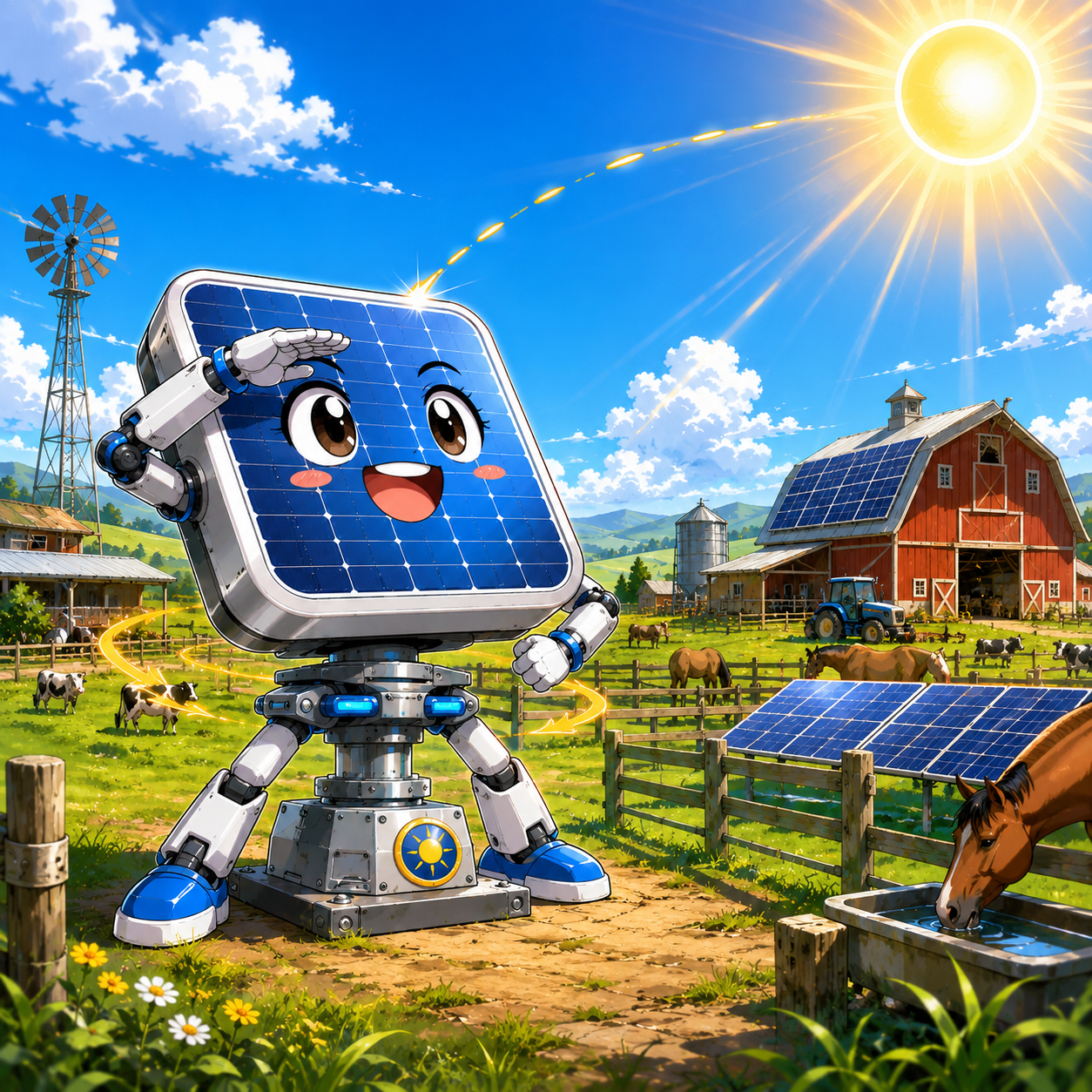
Morning, noon, and afternoon sunlight hit a panel from different angles. A fixed panel is optimized for a chosen compromise angle.
A solar tracking pod is a compact solar unit that turns toward the sun. The manga version smiles. The real-world version needs structure, controls, wind review, batteries, wiring, maintenance, and permits.
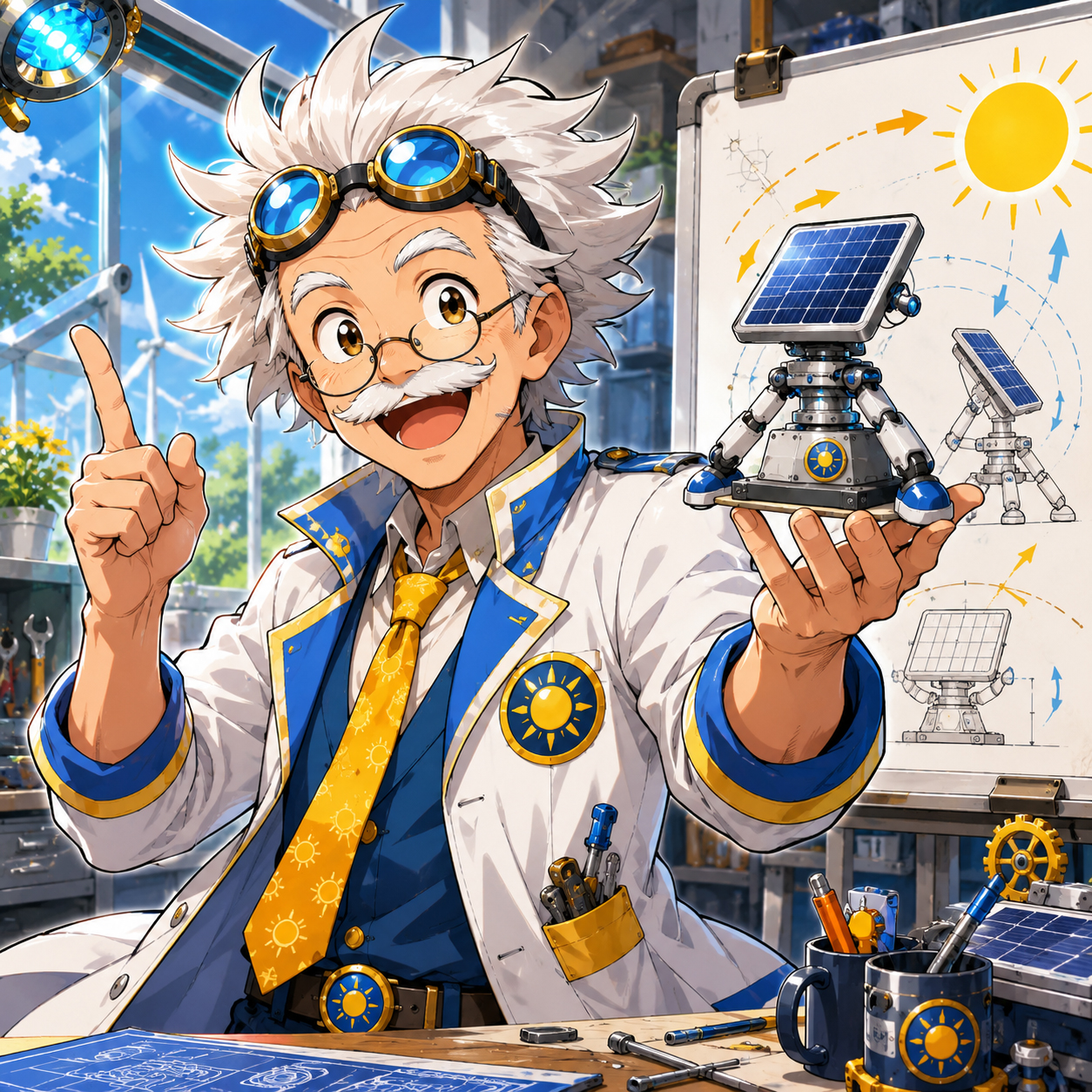
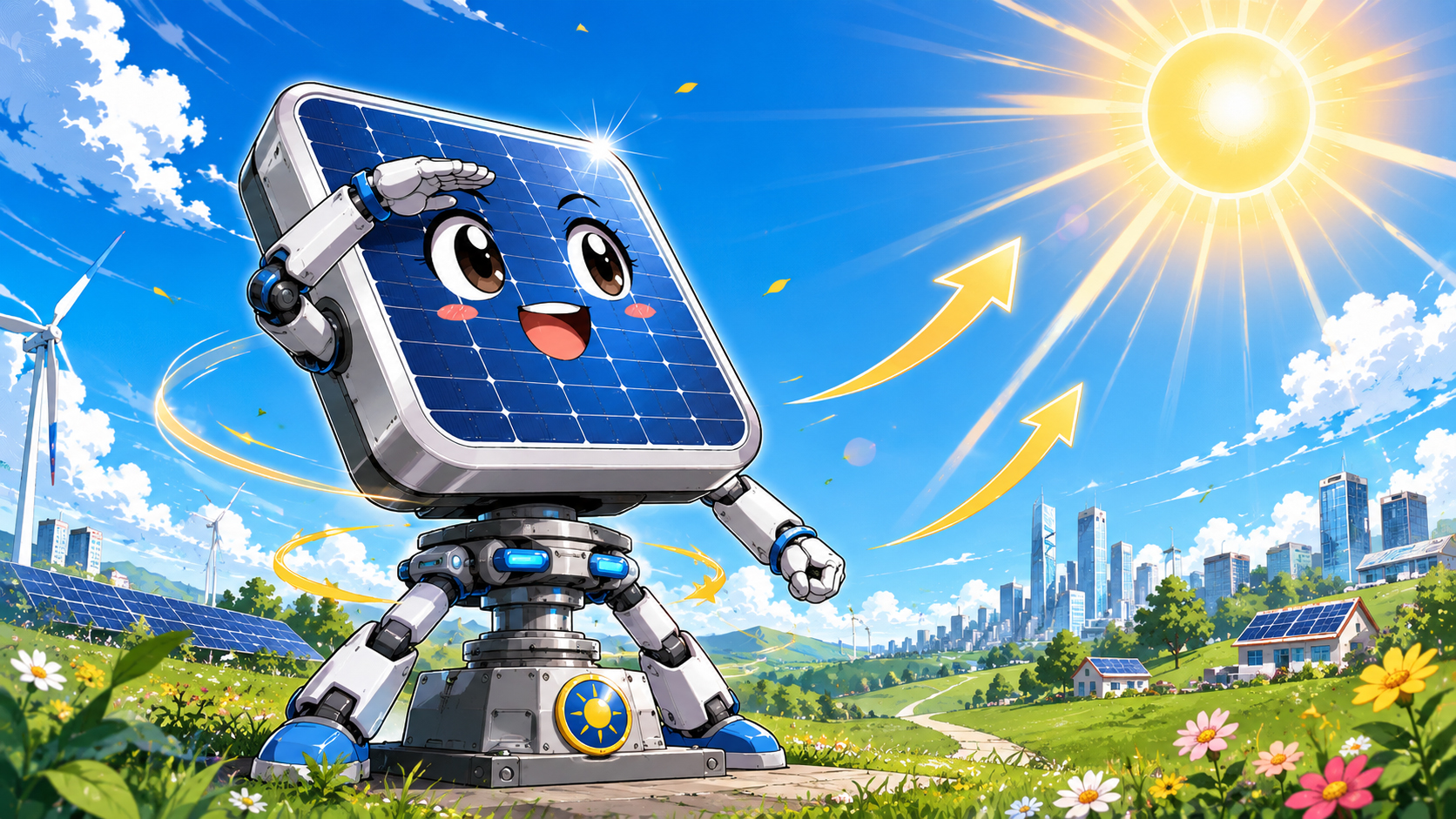
Fixed panels wait for the sun. Tracking pods chase the useful angle. That movement is the whole story — and also the source of the engineering complications.
Morning, noon, and afternoon sunlight hit a panel from different angles. A fixed panel is optimized for a chosen compromise angle.
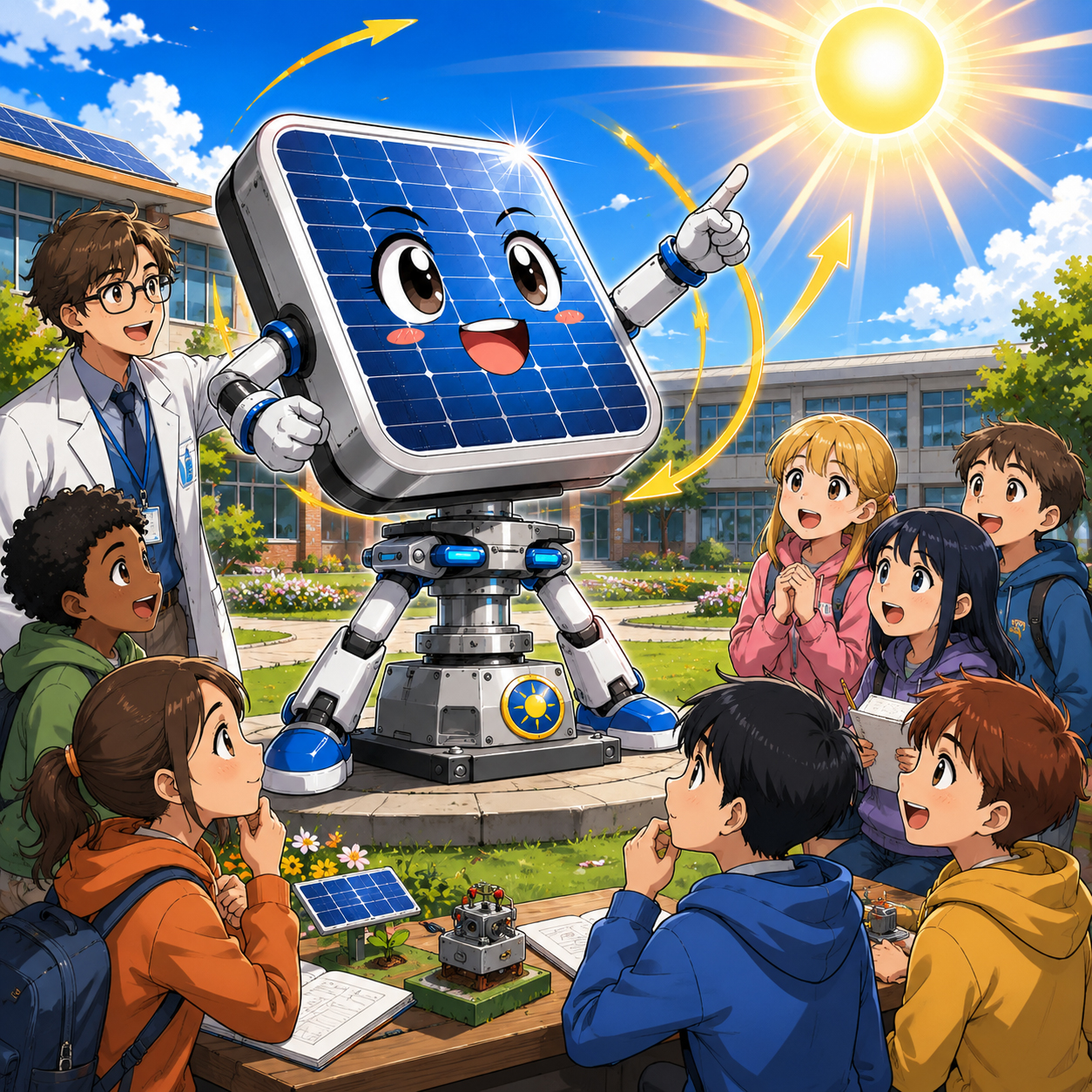
A tracker uses a moving support to aim the panel more directly toward sunlight. It may move on one axis or two axes.
Tracking can improve production shape, especially outside the middle of the day, but site conditions decide whether the benefit is worth it.
A tracker can use programmed sun-position logic, sensors, motors, actuators, and safety stow positions for bad weather.
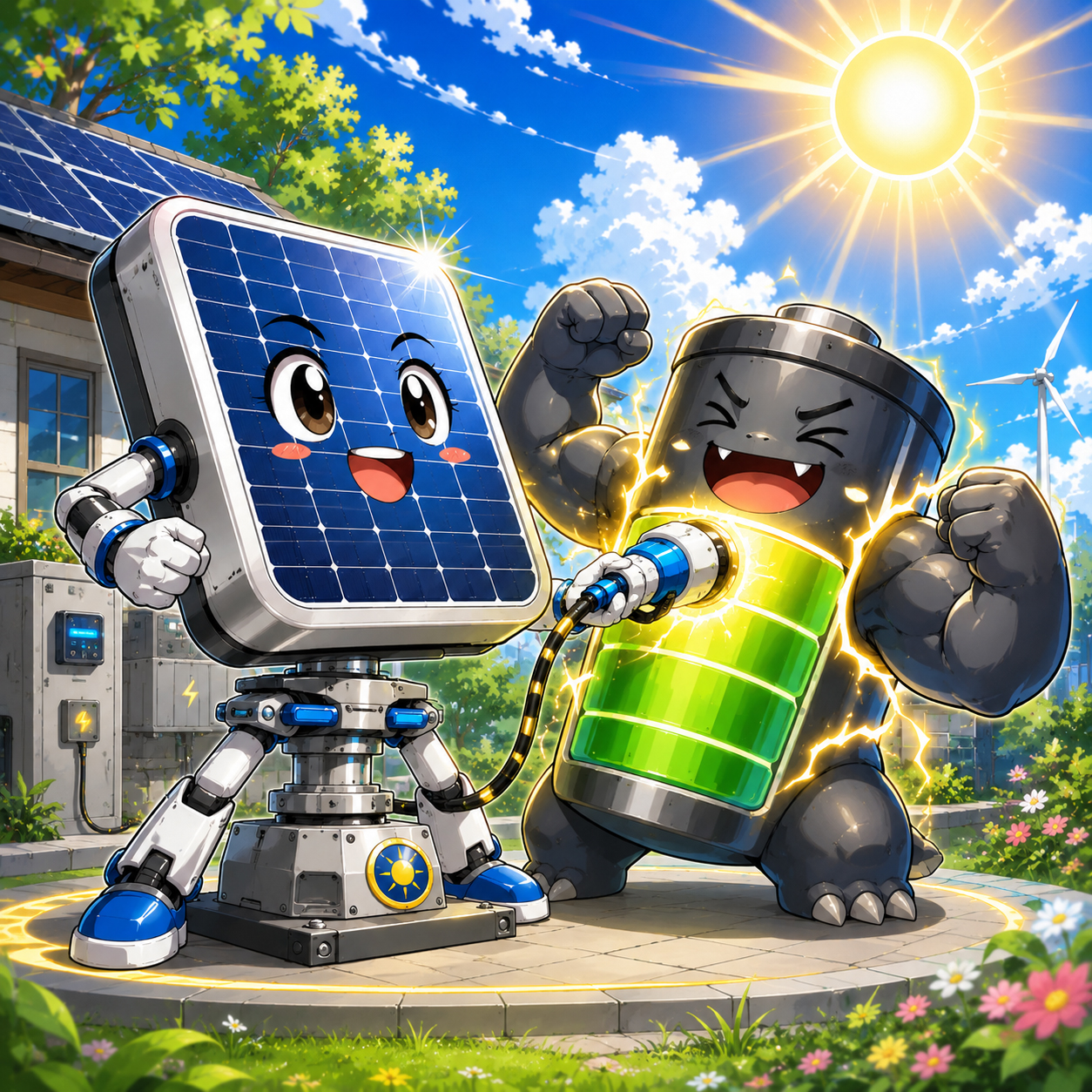
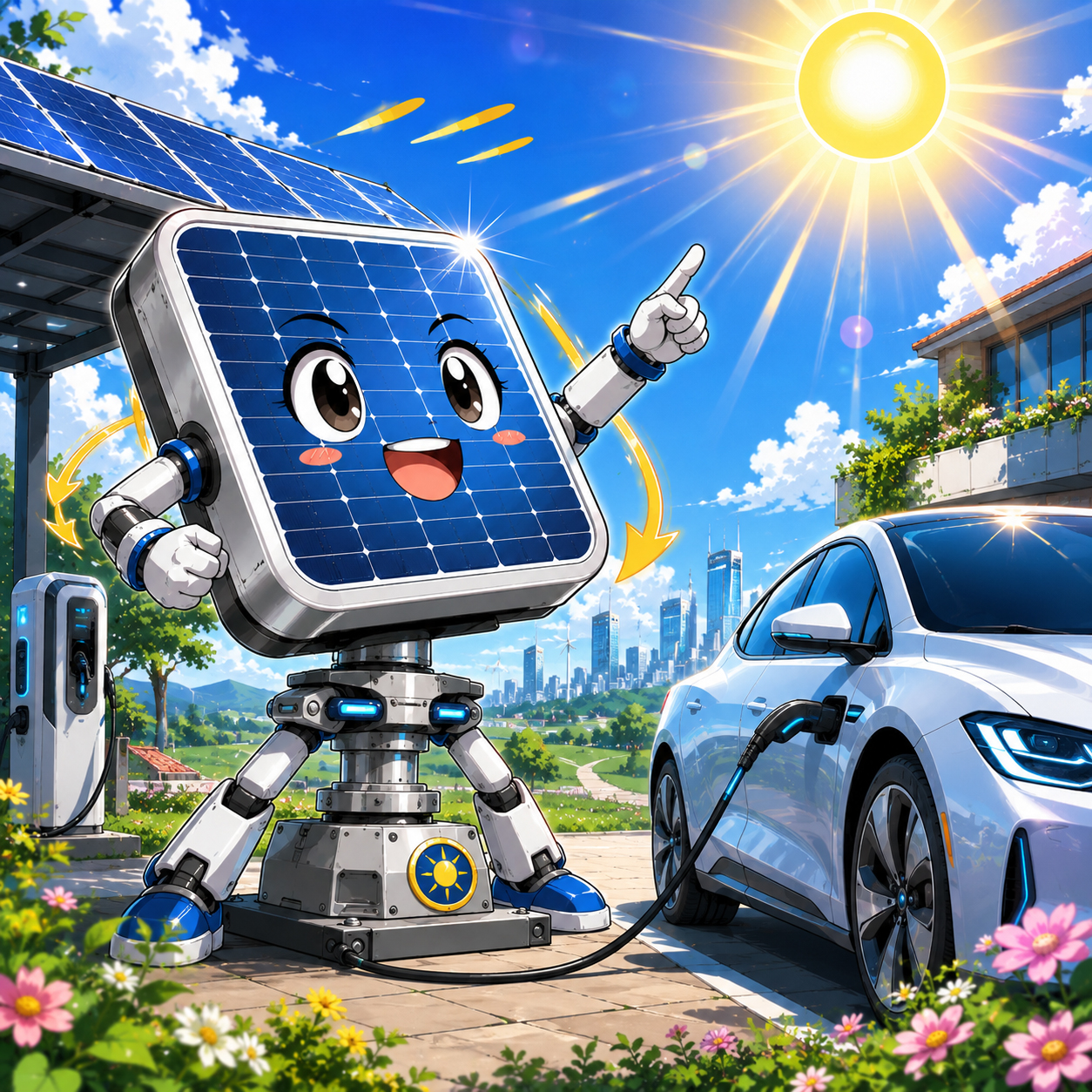
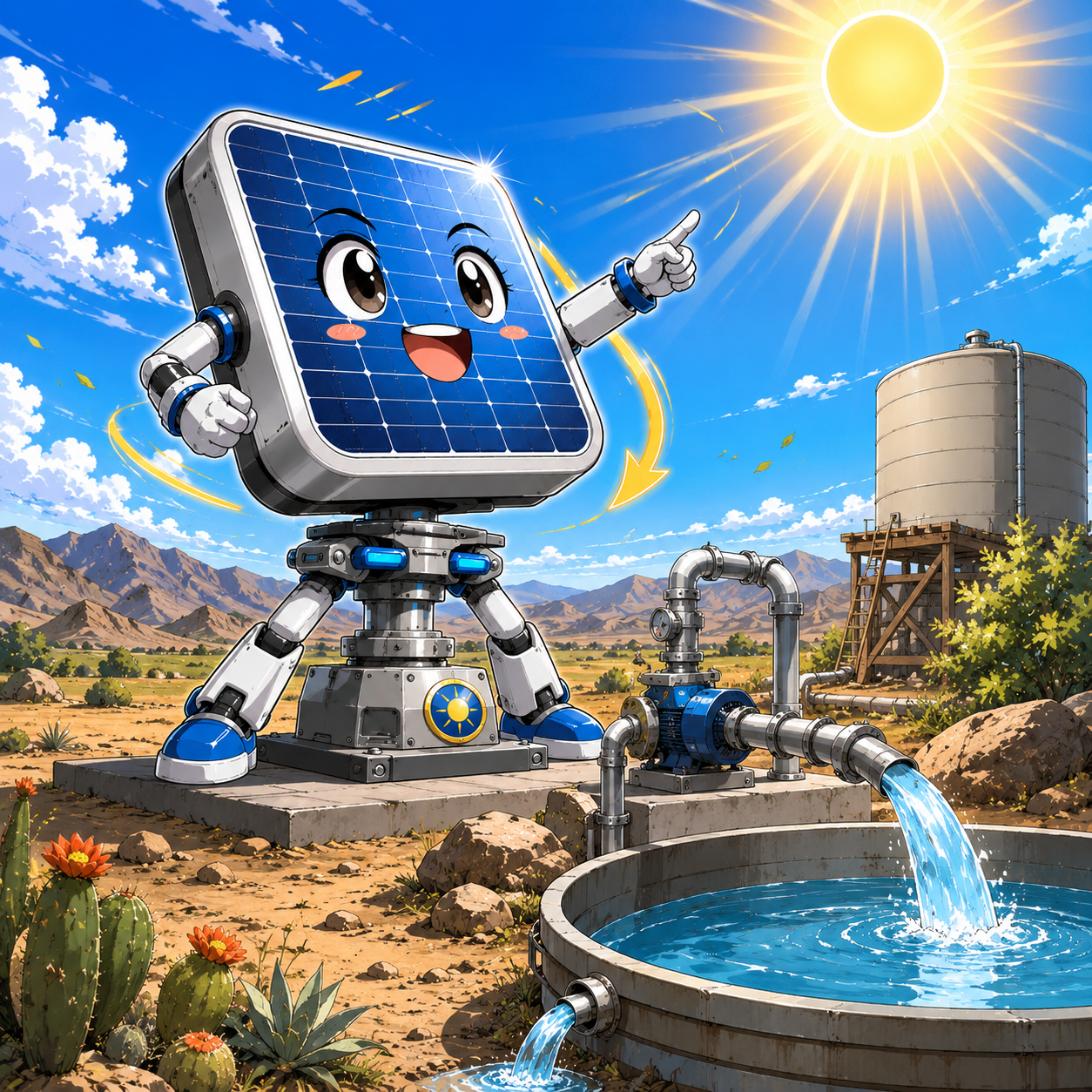
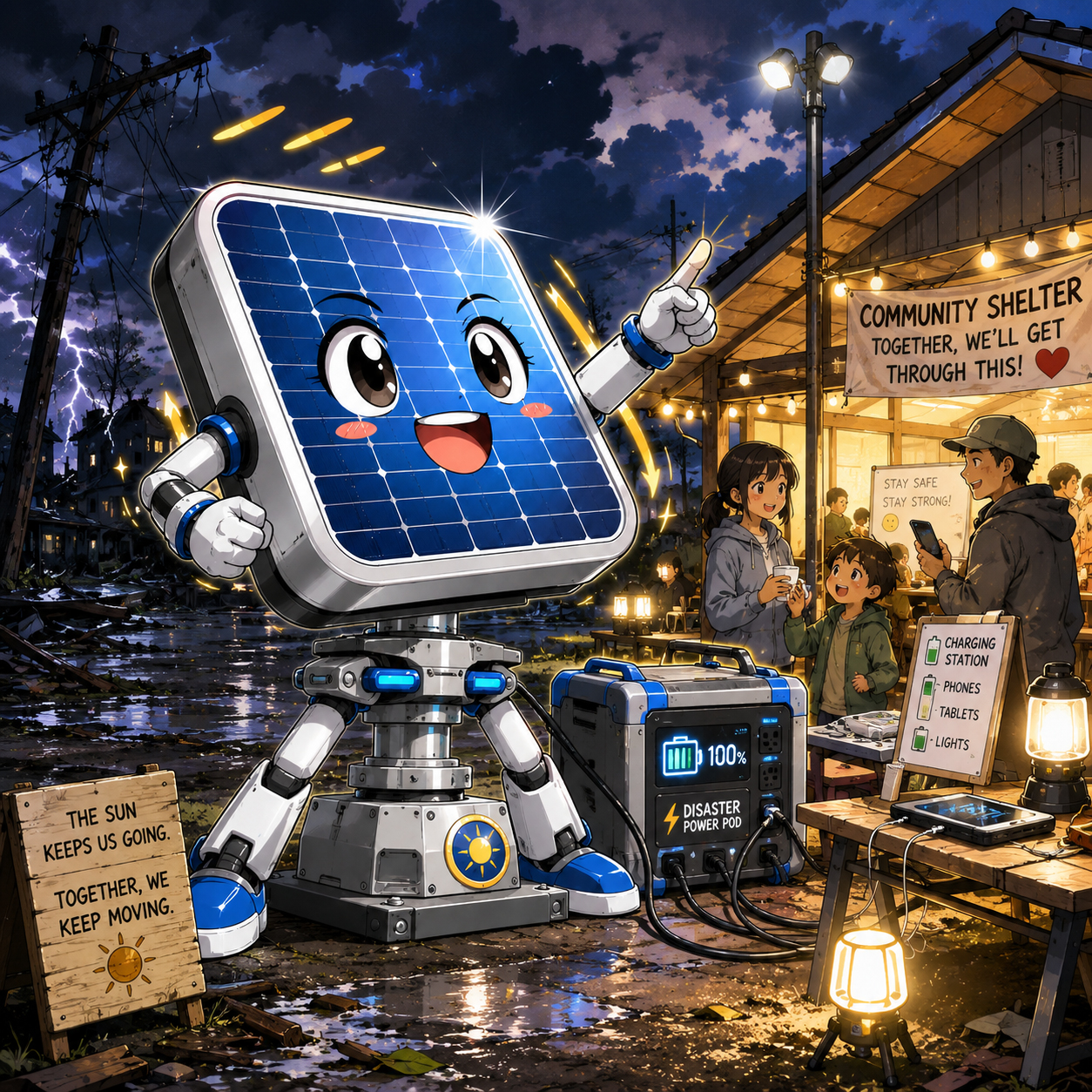
Pods become more interesting when the energy has a job: charge batteries, support EVs, pump water, or run small off-grid loads.
A moving panel is a sail if the design is wrong. Structure, anchoring, wind stow, and inspection are not optional.
The pod tries to keep the solar panel better aligned with the sun. That may increase useful production in the morning and afternoon, but the hardware must survive the real world.
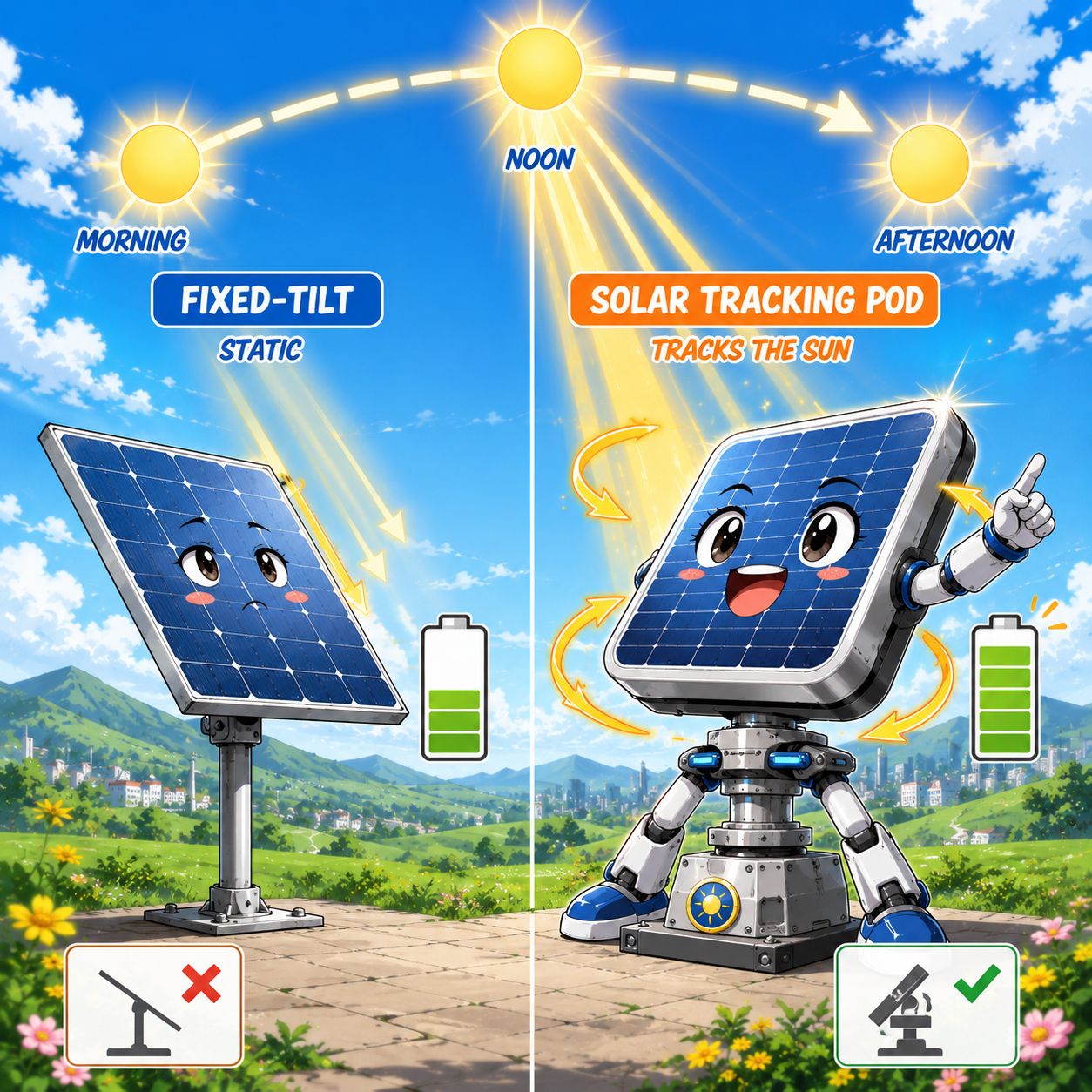
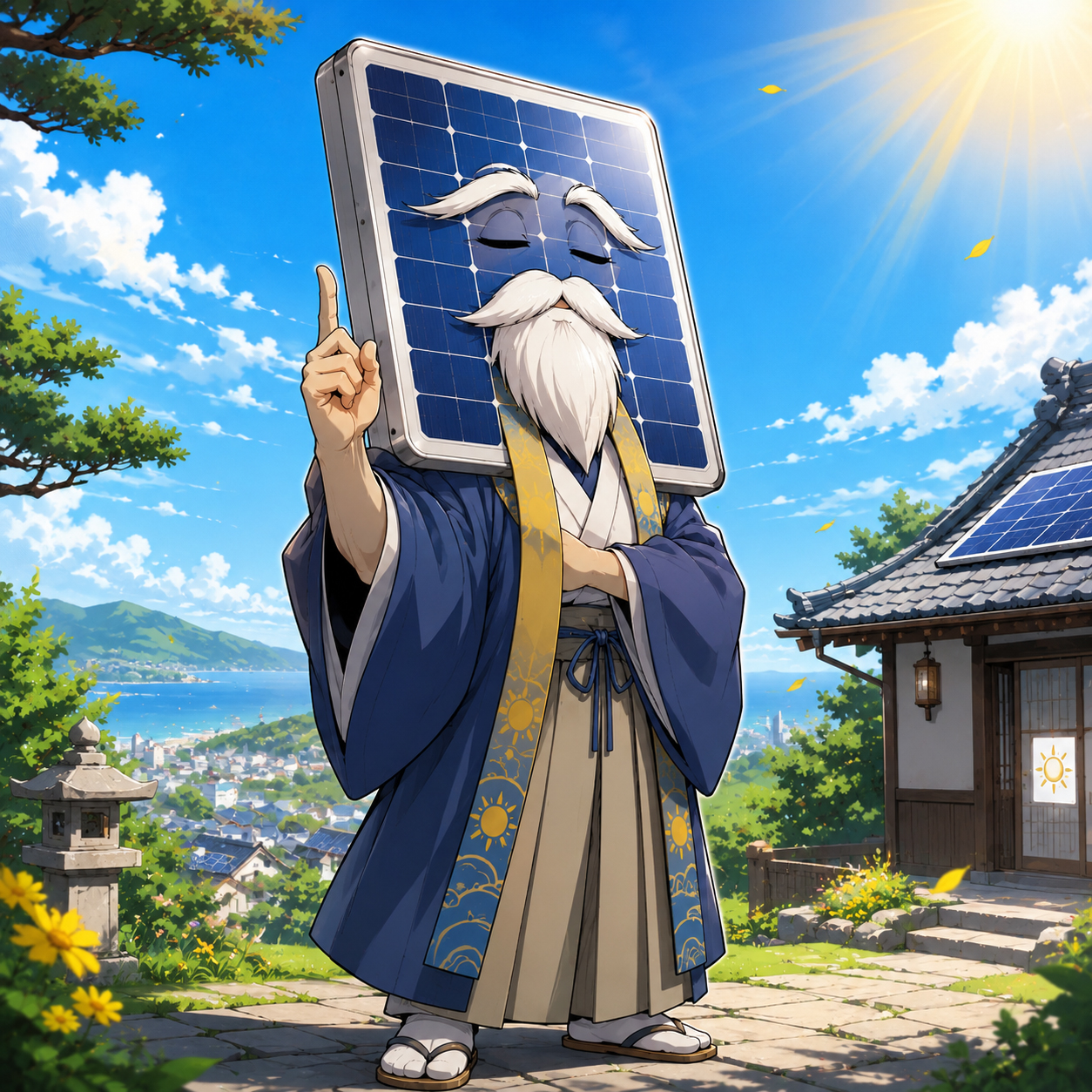
Professor Sol-Turn gets excited. Fixed-Tilt Sensei stays calm. Both are right depending on the job.
Any tracking pod must be reviewed for wind loading, foundations, anchoring, mechanical limits, electrical safety, grounding, access, and shutdown behavior. This site is educational, not engineering advice.
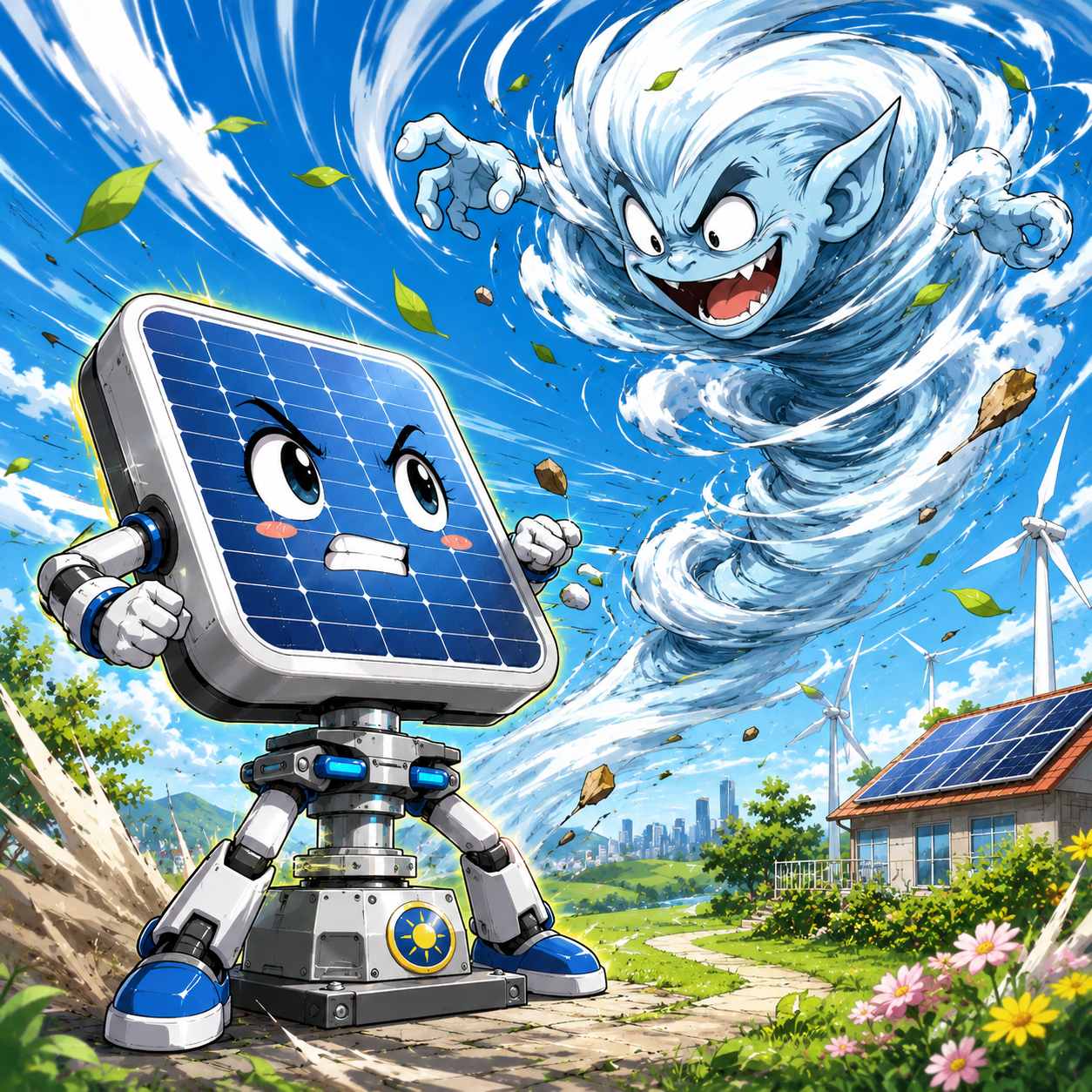
A real tracking pod is a small system of systems. The panel is only the visible part.
Tracking pods make the most sense when the solar energy has a defined mission.
Solar tracking pods are exciting when motion has a mission. But the more a solar system moves, the more engineering discipline it needs. Use the manga to explain the concept. Use qualified professionals to build anything real.