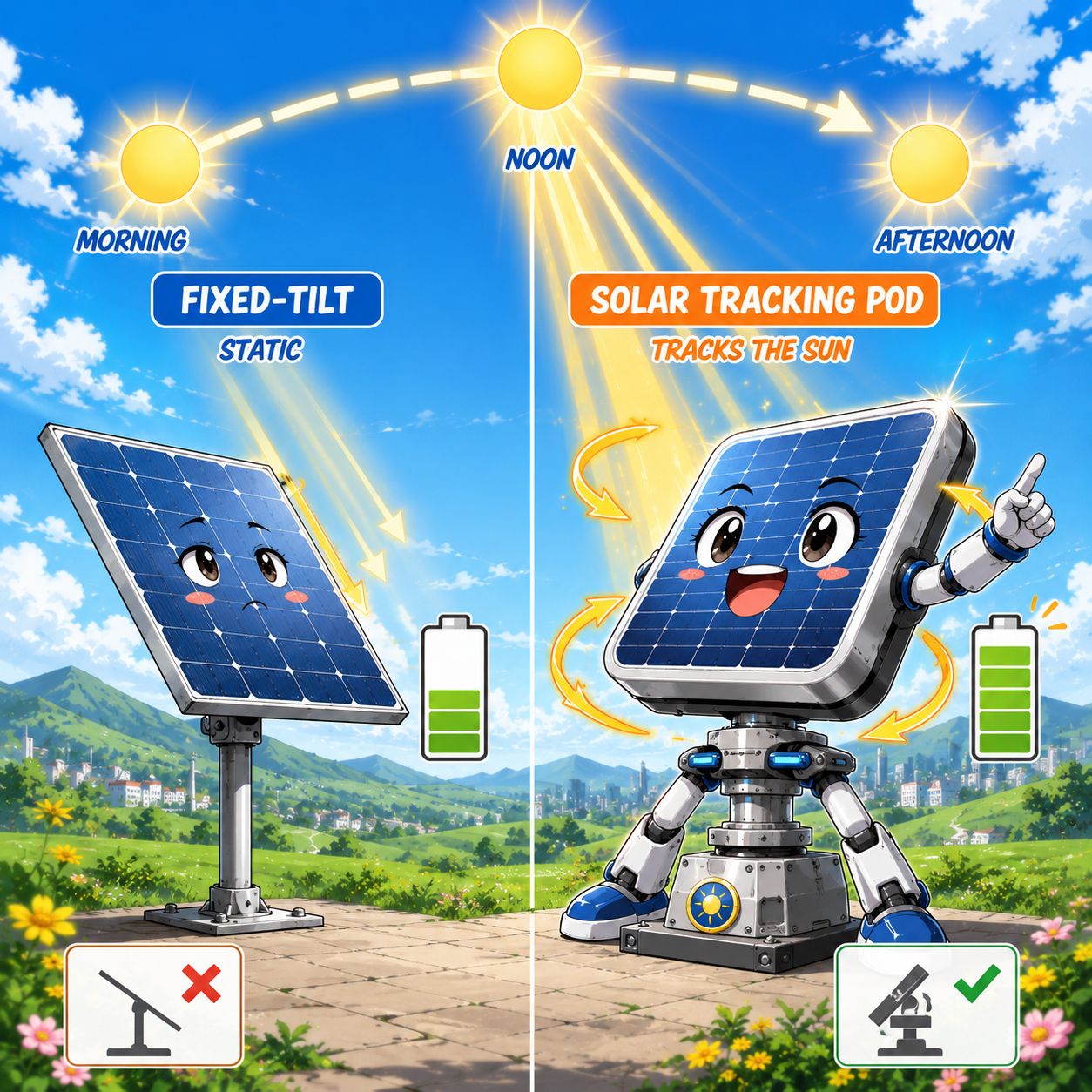
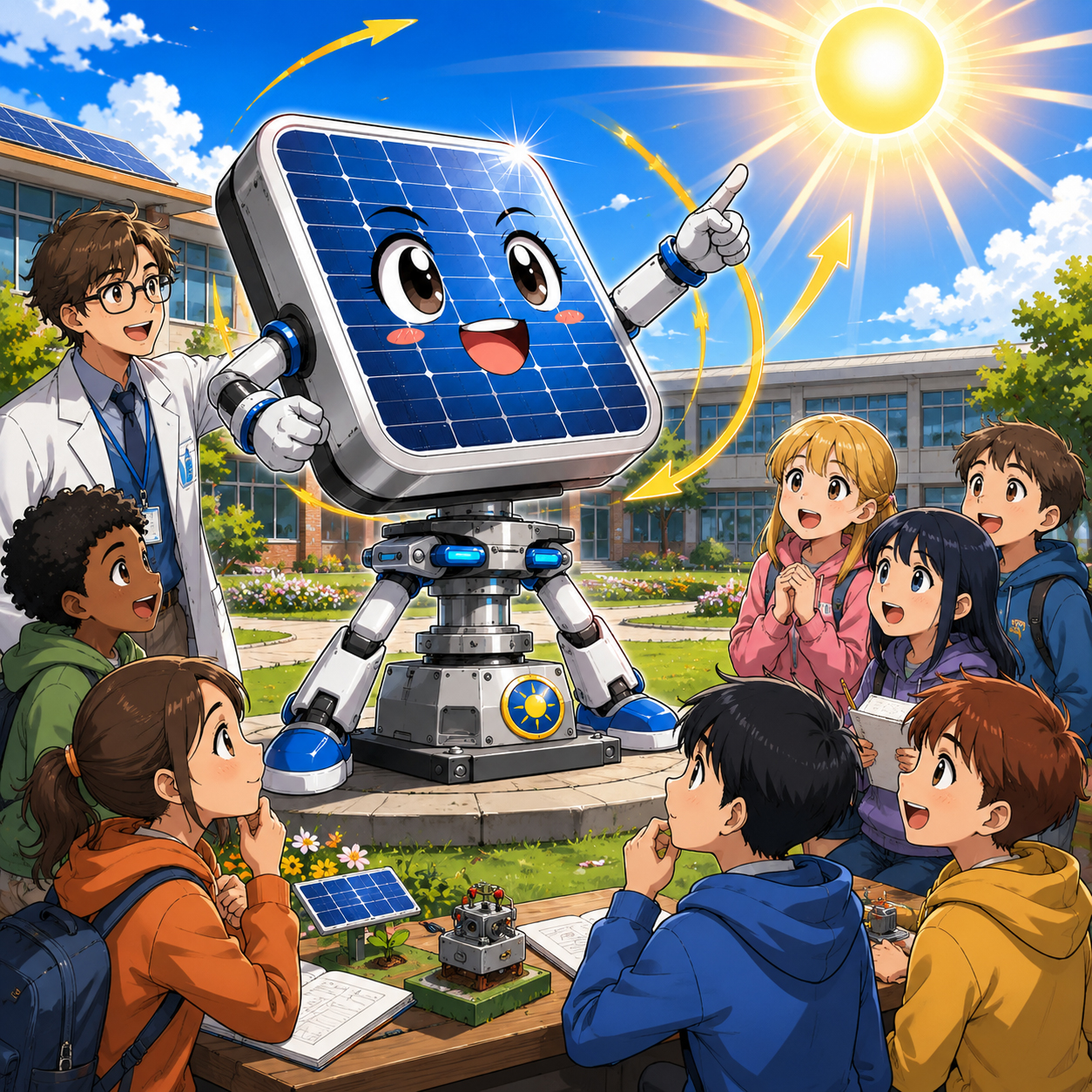
Professor Sol-Turn opens the service panel

Tracking pods need maintenance brains.

Moving solar equipment needs controls, service access, inspection routines, safe stow behavior, wire protection, and failure planning. Solar Pod Boy is cute; loose fasteners and dead actuators are not.

Professor Sol-Turn explaining solar tracking maintenance and controls
CHECK
THE
CONTROLS!

The control system is the pod’s nervous system.

A tracker must know where to point, when to move, when to stop, and what to do when something goes wrong.

Position logic

The controller may use time, location, sun-path calculations, sensors, or a programmed schedule to aim the panel.

Actuators

Motors, linear actuators, gearboxes, or drive systems convert commands into physical movement.

Limit switches

The system needs to know where movement must stop so it does not overtravel or damage wiring and hardware.

Stow commands

The safest command may be to stop tracking and move to a storm, service, or shutdown position.

The best tracker knows when not to track.

A tracking pod should fail safely. If the wind rises, a controller faults, a sensor fails, or maintenance is needed, the pod must have a safe behavior.

  • High-wind stow command.
  • Manual service position.
  • Power-loss behavior.
  • Controller fault response.
  • Clear lockout and restart procedure.
Wind Goblin attacking tracker to show need for stow controls

The service checklist board.

The maintenance plan should be written before installation, not discovered after something fails.

Maintenance and controls checklist

Fasteners Inspect bolts, clamps, frames, pivots, brackets, and structural connections.
Actuators Check motors, linear drives, gearboxes, linkages, and movement limits.
Wiring Protect moving cable loops, strain relief, conduit, connectors, and insulation.
Sensors Confirm position sensors, wind inputs, limit switches, and communications.
Software Verify tracking schedule, fault logic, stow behavior, and alarms.
Site Check vegetation, debris, dust, animal damage, corrosion, and access paths.

No maintenance plan means no serious tracker.

Tracking systems add moving parts and control logic. If nobody owns inspection, testing, cleaning, tightening, and service response, fixed solar may be the better answer.
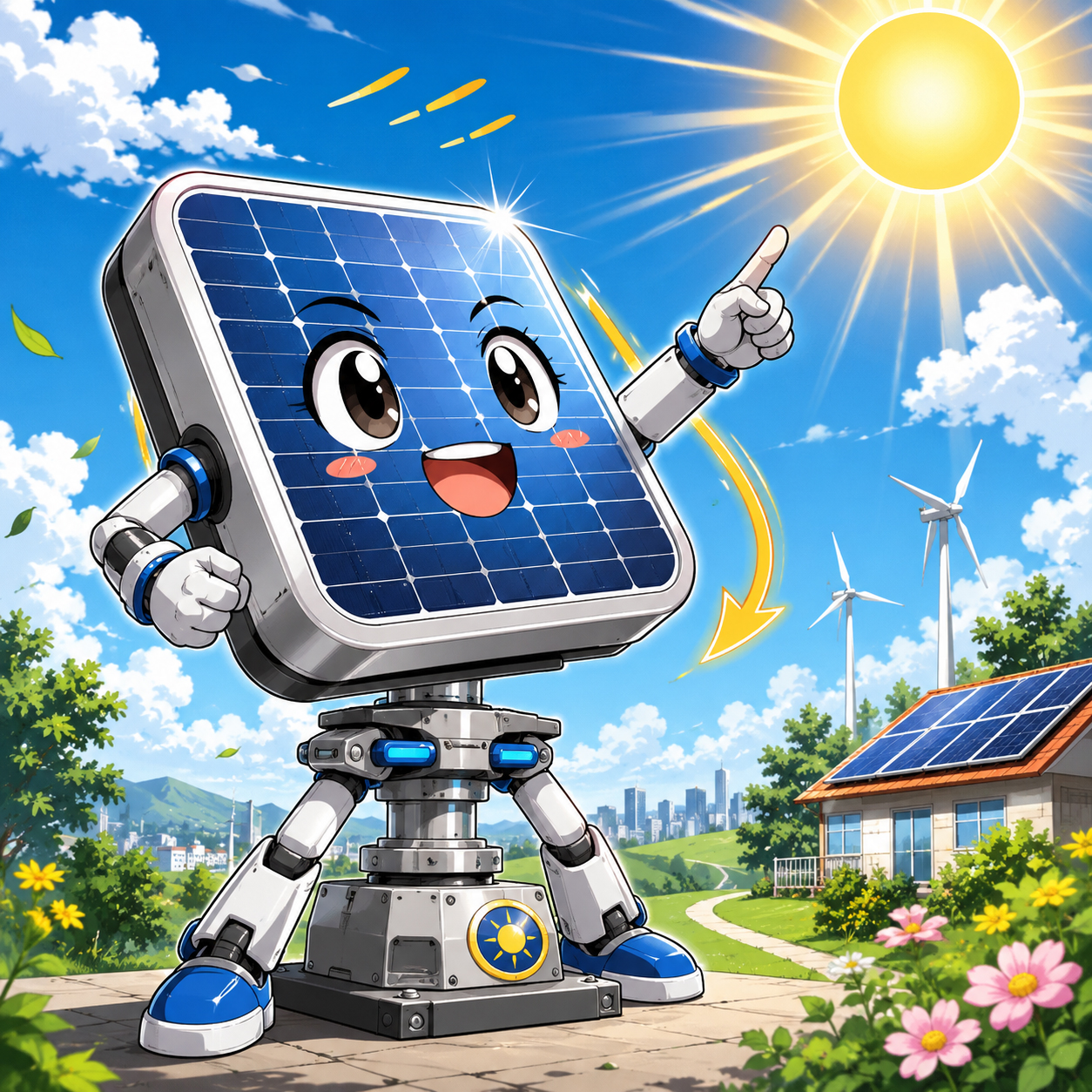
Solar tracking pod with moving parts

Moving panels move the wiring problem too.

A fixed panel’s wiring can be secured once. A tracker’s wiring must survive repeated motion, weather, vibration, and service.

  • Use proper strain relief and protected loops.
  • Avoid rubbing, pinching, and overbending conductors.
  • Protect connectors from water and dust.
  • Keep service disconnects accessible.
  • Inspect wire paths as part of routine maintenance.

Failure modes must be boring.

In manga, failure is dramatic. In engineering, failure should be predictable, contained, and safe.

Plan for

  • Loss of controller power.
  • Sensor error or position mismatch.
  • Actuator jam or stalled motor.
  • Communication loss.
  • Wind alert or emergency shutdown.
  • Manual service lockout.

Avoid

  • Tracker stuck in a high-wind angle.
  • Cables pulled tight by movement.
  • Unprotected pinch points.
  • Service work without lockout.
  • Unclear reset procedures.
  • Systems that keep moving during faults.

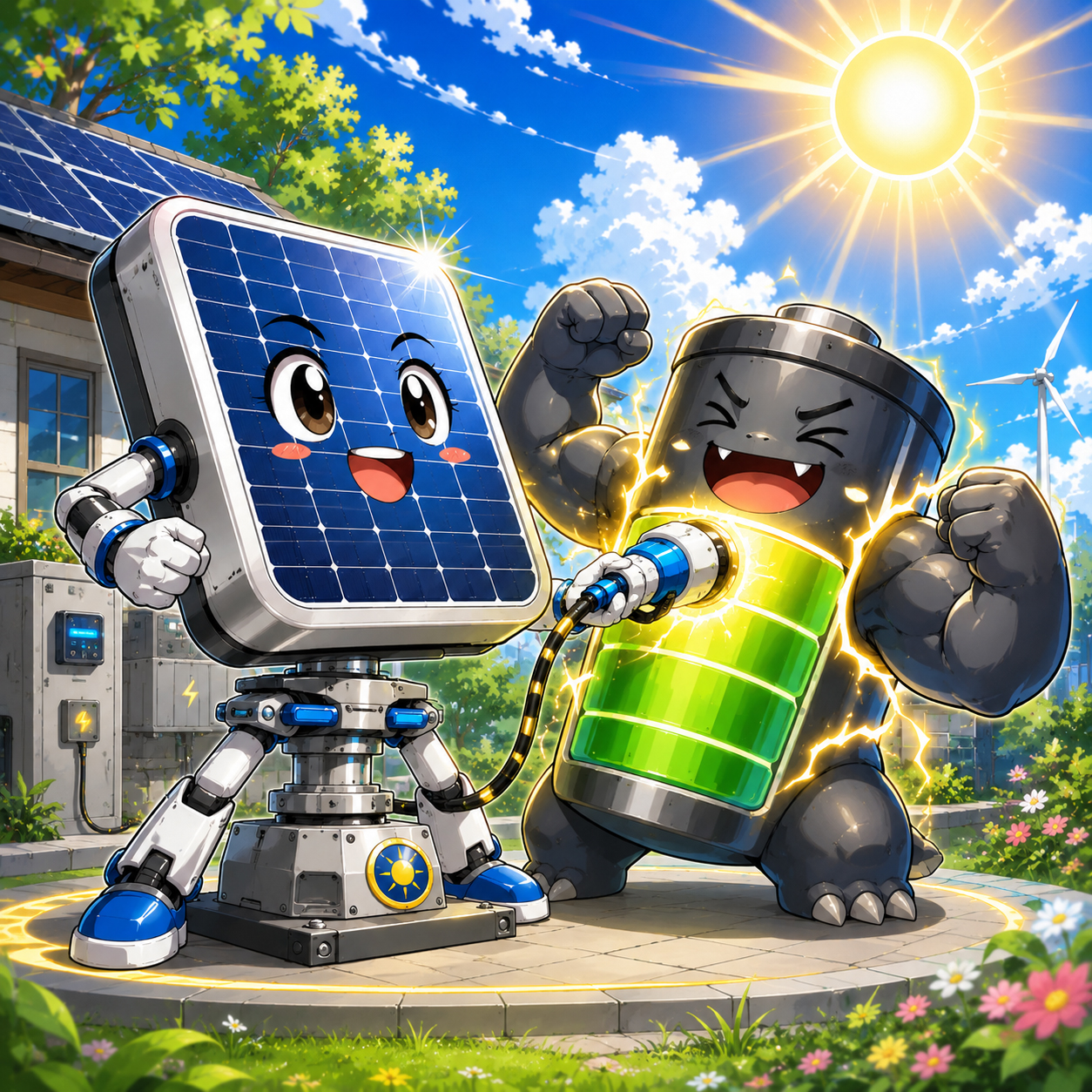
Battery controls need their own discipline.

When a pod charges batteries, the control story expands. Charging limits, battery management, inverter behavior, disconnects, and safety rules become part of the system.
  • Respect charge and discharge limits.
  • Monitor battery temperature and state of charge.
  • Coordinate inverter, charger, and load controls.
  • Provide clear shutdown and service procedures.
  • Follow battery spacing, enclosure, and code requirements.
Battery Beast charging from a solar tracking pod

Good maintenance fit and bad maintenance fit.

A tracker should match the owner’s willingness to maintain moving equipment.

Better-fit projects

  • Owner understands scheduled inspections.
  • Equipment is accessible and not buried in weeds or mud.
  • Replacement parts and service documentation exist.
  • Faults are visible through alarms or monitoring.
  • Manual lockout and stow procedures are clear.
  • The added production value justifies maintenance effort.

Bad-fit projects

  • No maintenance budget.
  • No person responsible for service.
  • Remote site with poor access.
  • Animal or public access to moving hardware.
  • Unlisted or improvised controller hardware.
  • Expectation that moving parts will be “install and forget.”
Fixed Tilt Sensei manga character

Fixed-Tilt Sensei has fewer chores.

Fixed solar still needs inspection, cleaning, and electrical maintenance. But it usually avoids motors, actuators, sensors, stow logic, and moving wire paths.

  • Fewer moving parts.
  • Simpler wiring path.
  • Less control logic.
  • Often easier to inspect and permit.
  • Tracking must justify the added service burden.

Wind Goblin tests the controls first.

The structure has to be strong, but the controller must also know when to command safe behavior.

  • Test high-wind stow before storm season.
  • Make sure the stow command works without drama.
  • Verify limit switches and position feedback.
  • Document manual override and lockout steps.
  • Inspect after major wind events.
Wind Goblin testing solar tracker controls

Continue the pod lab.

Maintenance and controls connect to every tracking decision.

Bottom line.

A tracking pod is only as good as its controls and maintenance plan. If the system cannot be inspected, stowed, serviced, locked out, reset, and safely repaired, fixed solar may be the responsible choice.