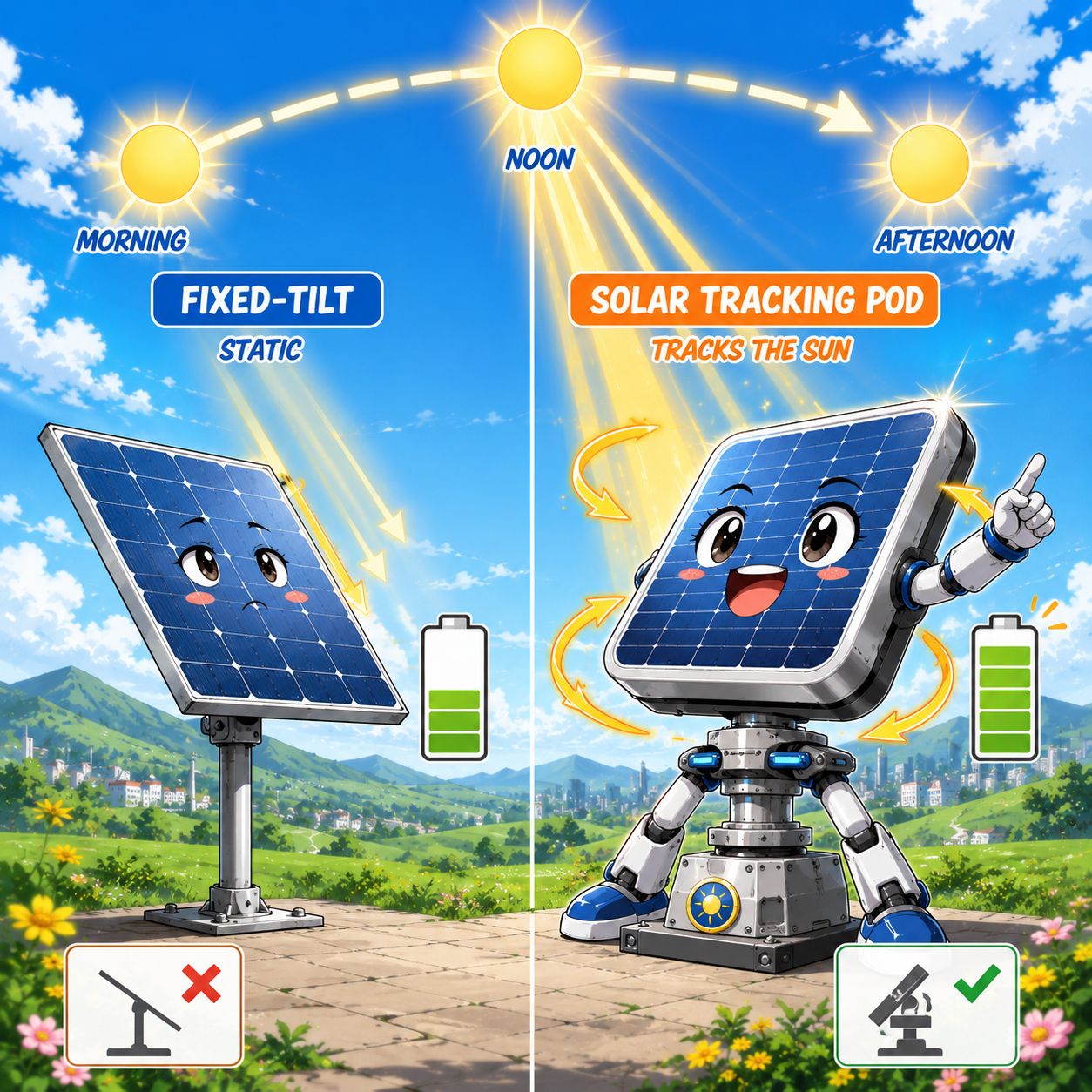
The Wind Goblin does not negotiate

Wind and structure decide whether the pod survives.

Solar tracking looks fun until the wind arrives. A moving panel can become a sail. Wind loading, foundations, stow position, anchoring, service access, and structural review are the difference between a concept and a responsible system.

Wind Goblin attacking a solar tracking pod
STOW
OR GO!

Wind is not a side issue.

For a tracking pod, wind is a primary design condition. The panel moves, the forces change, and the structure must be ready before the first gust.

Panel as sail

A tilted solar panel can catch wind. The bigger and higher the panel, the more serious the forces become.

Changing angles

A tracker presents different shapes to the wind as it moves. The worst case may not be the normal operating angle.

Load path

Wind force must travel safely through panel, frame, mount, post, foundation, ballast, roof, or ground support.

Stow logic

A tracker needs a safe position for high wind, faults, storms, maintenance, and shutdown.

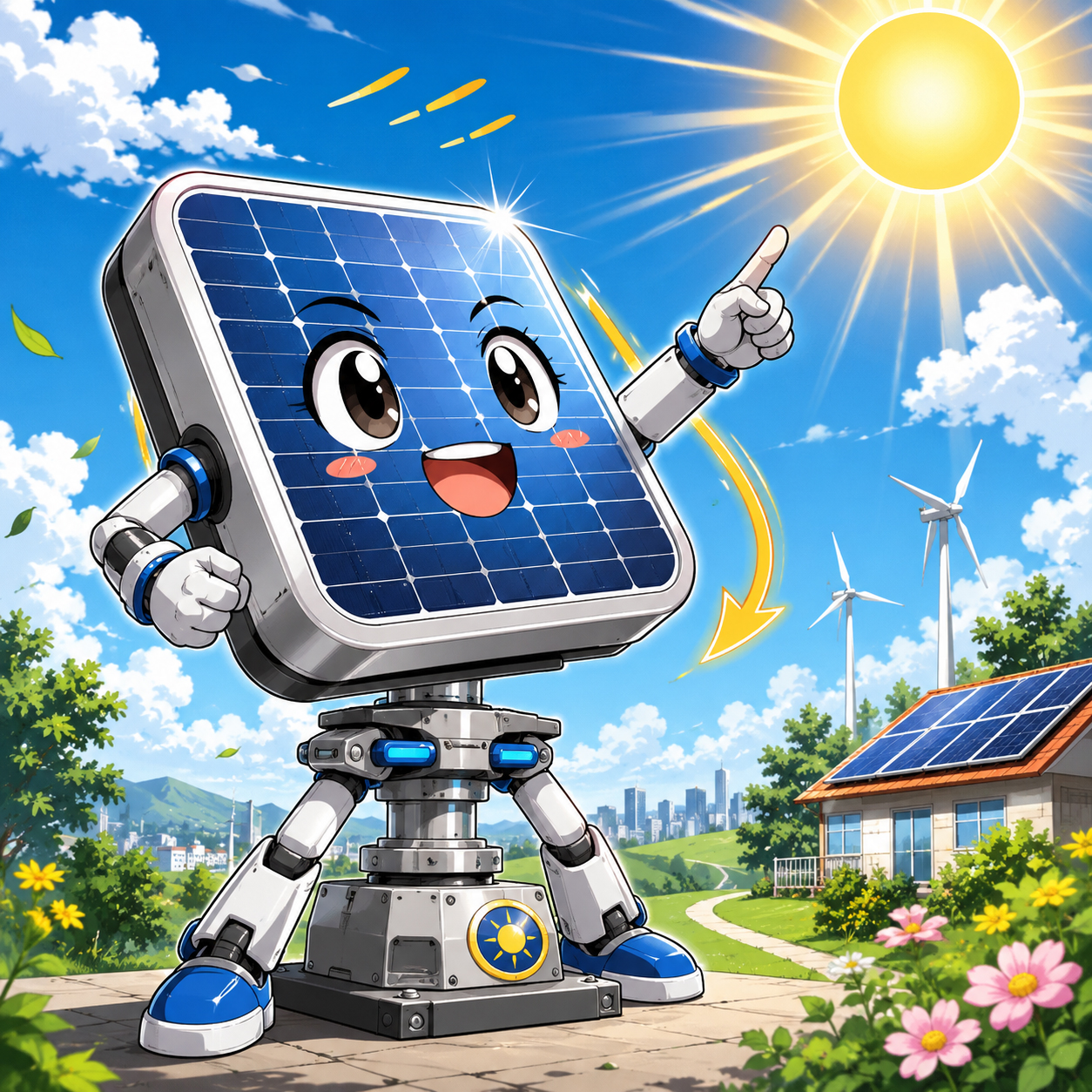
Stow position is the hero move.

The pod does not win by always chasing the sun. It wins by knowing when to stop, flatten, turn, lock, or shut down safely.
  • Define the safe high-wind position.
  • Decide how the tracker detects or receives wind alerts.
  • Plan what happens during power loss or controller fault.
  • Make sure service people can lock out and maintain the system.
  • Test stow behavior before storm season.
Solar tracking pod following the sun before stowing

The structural review board.

A tracker is not just a panel. It is a force machine. Every part has to pass the wind load to something strong enough to resist it.

Structural questions before installation

Exposure Is the site open, coastal, hillside, canyon, desert, roof edge, or sheltered?
Height How high is the panel above ground or roof surface?
Surface area How much panel area can catch wind in each position?
Foundation Is the pod anchored to concrete, piers, ballast, steel, roof framing, or ground mount?
Load path Where does the force go after it leaves the panel frame?
Maintenance Can the system be inspected, tightened, lubricated, and repaired safely?

No structural guesswork.

Wind design is not a visual guess. Actual systems need qualified structural review based on local conditions, equipment geometry, code requirements, mounting method, and site exposure.
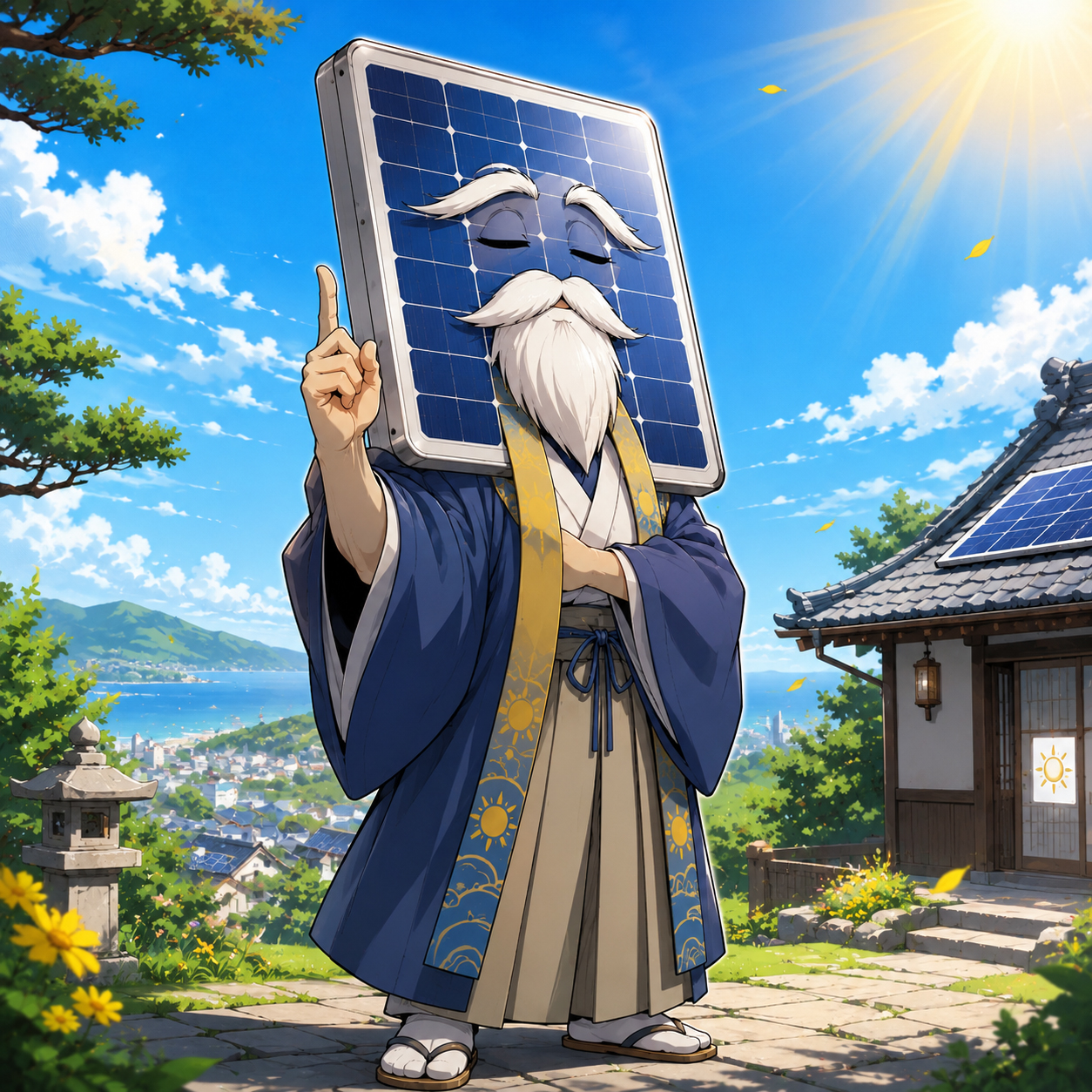
Fixed Tilt Sensei solar manga character

Fixed-Tilt Sensei is calmer in the wind.

Fixed solar is not immune to wind, but fixed systems are usually easier to analyze, anchor, inspect, and permit than moving trackers.

  • Fixed panels have fewer changing positions.
  • Roof racking and ground mounts have established methods.
  • Fewer moving joints means fewer mechanical failure points.
  • Permitting may be simpler than custom tracking hardware.
  • Tracking must prove the extra wind complexity is worth it.

Foundation, ballast, roof, or ground?

The mounting method controls the load path. Solar Pod Boy cannot float on enthusiasm.

Ground-mounted pod

  • May use piers, concrete footings, ballast, skids, or engineered frames.
  • Needs soil, uplift, overturning, and lateral-force review.
  • Requires clearance for movement and maintenance.
  • Must be protected from vehicles, animals, equipment, and irrigation.
  • Often more realistic for tracking than roof mounting.

Roof-mounted tracker

  • Generally much harder to justify than fixed roof solar.
  • Raises concerns about uplift, penetrations, loads, and service access.
  • Can create moving equipment hazards on a roof.
  • May complicate waterproofing, setbacks, and permitting.
  • Fixed solar is usually the practical roof answer.

Moving parts need inspection.

Bearings, pivots, actuators, motors, torque tubes, fasteners, and wire paths are all part of the system. The pod must be maintainable.

  • Check fasteners and structural connections.
  • Inspect pivots, bearings, actuators, and drive parts.
  • Protect wire loops and moving cable paths.
  • Keep animals and people away from pinch points.
  • Plan lockout/tagout and service procedures.
Professor Sol-Turn explaining solar tracker structure

Good-fit and hard-fit wind cases.

Some sites invite tracking. Some sites tell Solar Pod Boy to sit down and let Fixed-Tilt Sensei work.

Better-fit conditions

  • Open ground with room for safe movement and setbacks.
  • Engineered foundation or ballast system.
  • Clear maintenance access.
  • Defined safe stow position.
  • Moderate exposure or properly designed high-wind response.
  • Project value high enough to justify structural review.

Hard-fit conditions

  • Roof edges, parapets, or complex roof zones.
  • Coastal, canyon, hillside, or high-wind exposure without engineering.
  • Sites with animals, vehicles, or public access near moving parts.
  • No maintenance plan.
  • Unlisted or improvised tracking hardware.
  • Any design relying on “it looks sturdy enough.”

The Wind Goblin loves weak assumptions.

Wind loading, uplift, overturning, fatigue, corrosion, loose fasteners, and bad stow behavior can turn a clever pod into a hazard. Do not build without qualified review.
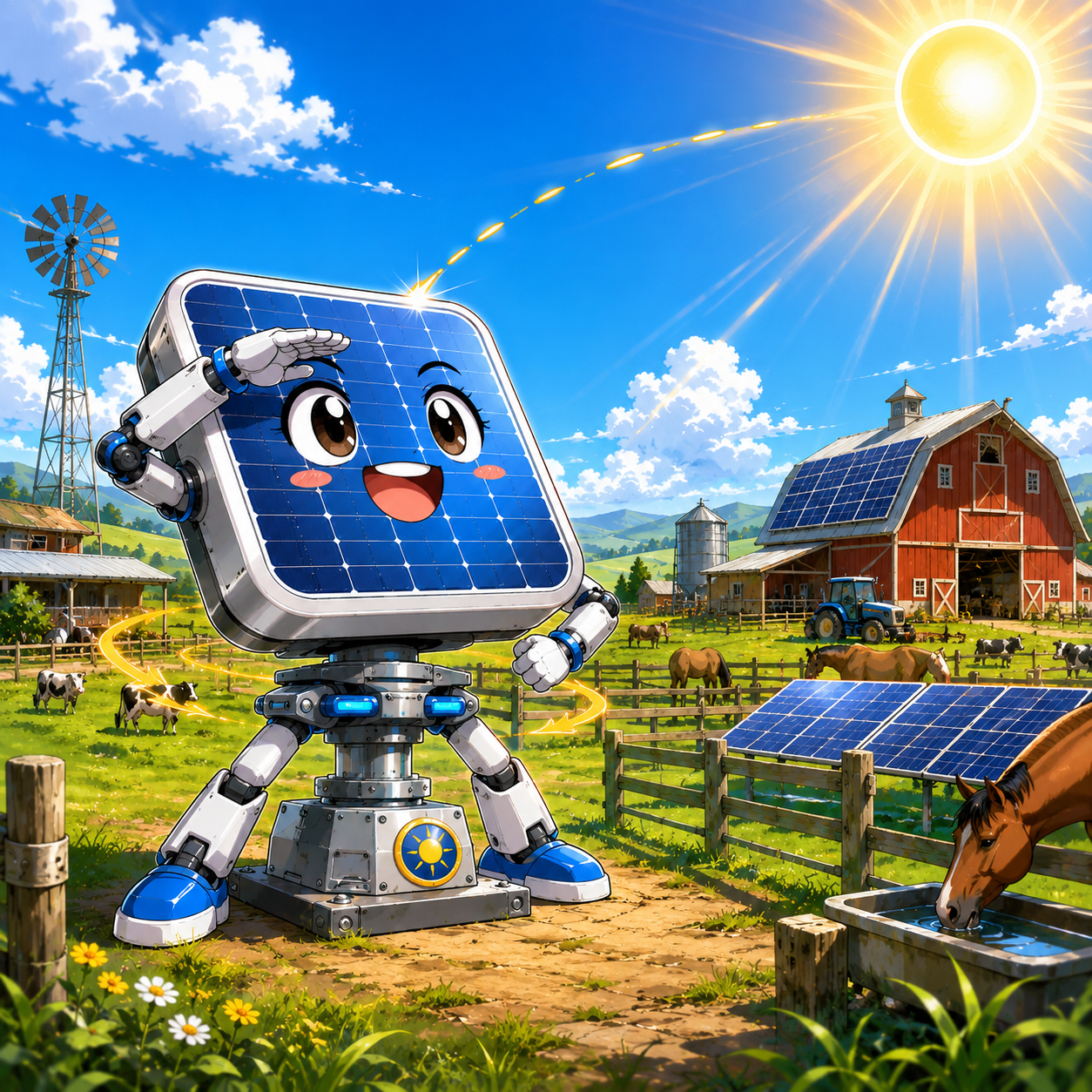
Solar tracking pod on farm and ranch site

The site changes everything.

A school courtyard, ranch field, desert pump, parking lot, and rooftop do not share the same wind story.

  • Ranches need animal and vehicle protection.
  • Schools need public safety and supervised access.
  • Remote pump sites need dust and service planning.
  • EV charging sites need bollards, clearance, and code separation.
  • Disaster sites need equipment that survives the disaster.

Continue the pod lab.

Wind and structure connect to every tracking-pod use case.

Bottom line.

Wind and structure are not afterthoughts. They are the gatekeepers. A solar tracking pod is only credible when the mount, load path, foundation, stow logic, maintenance access, and safety plan are engineered before installation.