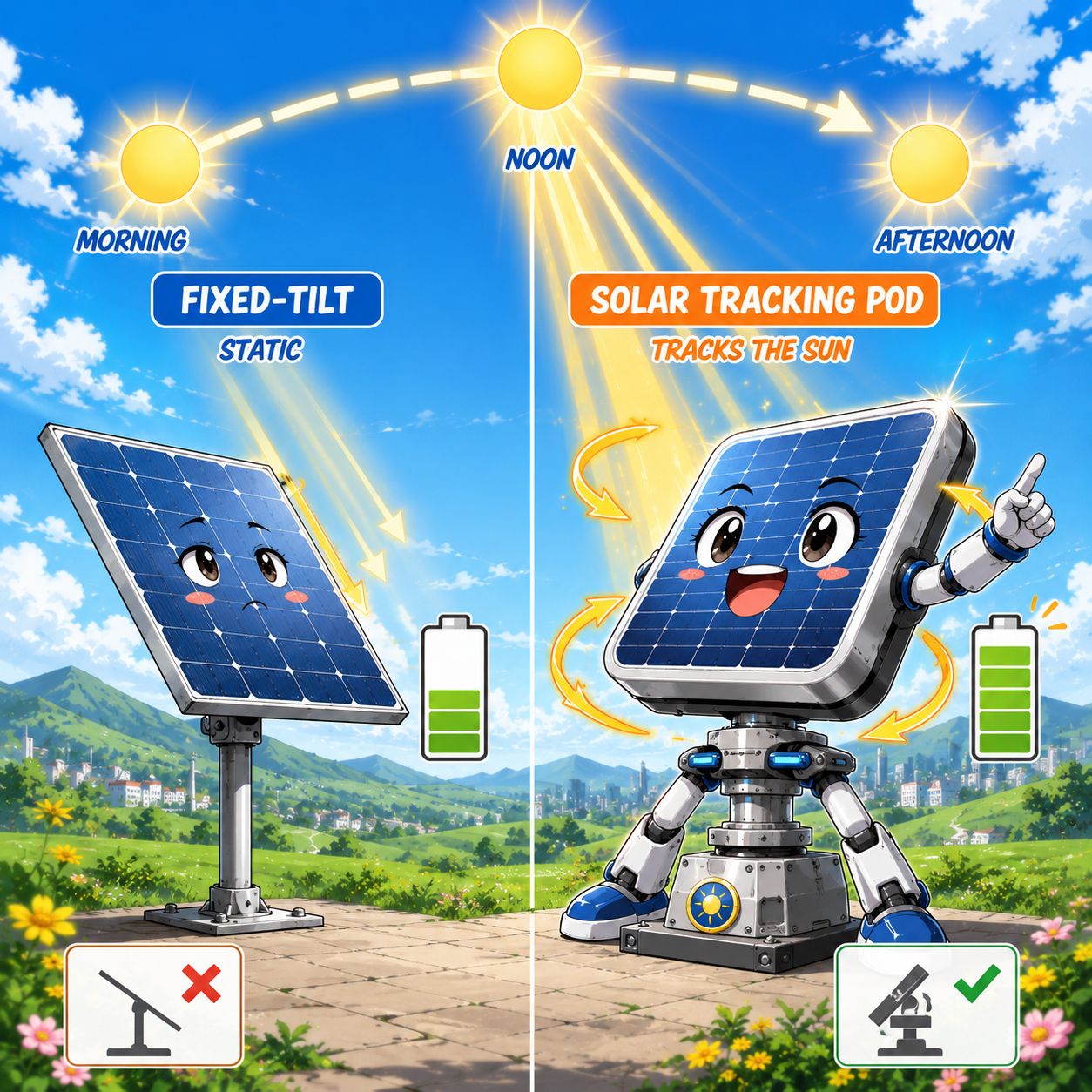
Panel 1
Late day: the sun slides west.
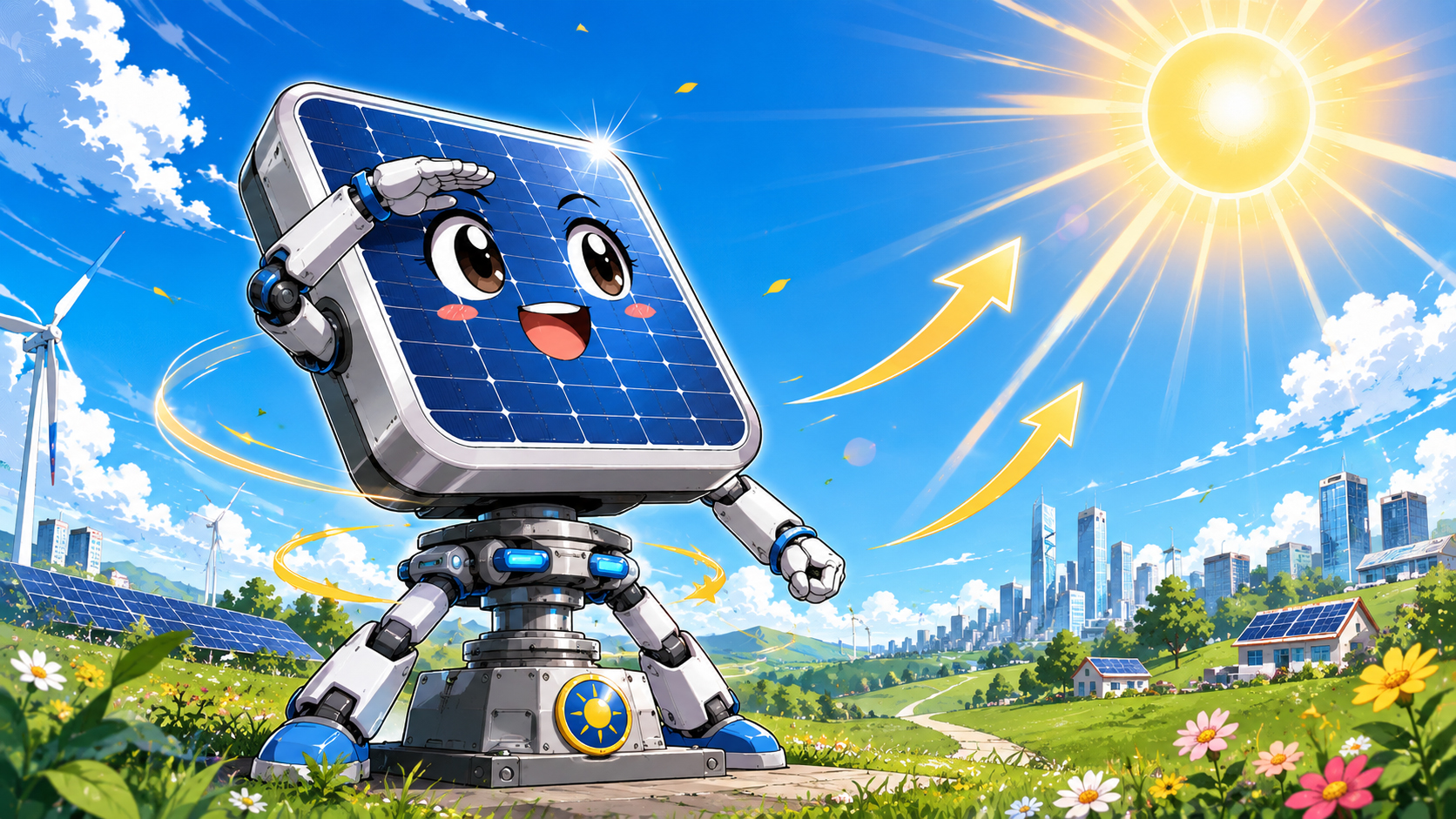
The fixed panel holds its chosen angle. Solar Pod Boy turns dramatically toward the afternoon light and announces a comeback.
“Midday is not the whole story!”
Solar Pod Boy chases the late sun like a superhero. Battery Beast wants a strong finish before evening. The EV charger wants real kilowatt-hours. Fixed-Tilt Sensei quietly asks whether more fixed panels would be cheaper.
Afternoon production can be valuable, but value is not automatic. Timing only matters when someone can use it.
The fixed panel holds its chosen angle. Solar Pod Boy turns dramatically toward the afternoon light and announces a comeback.
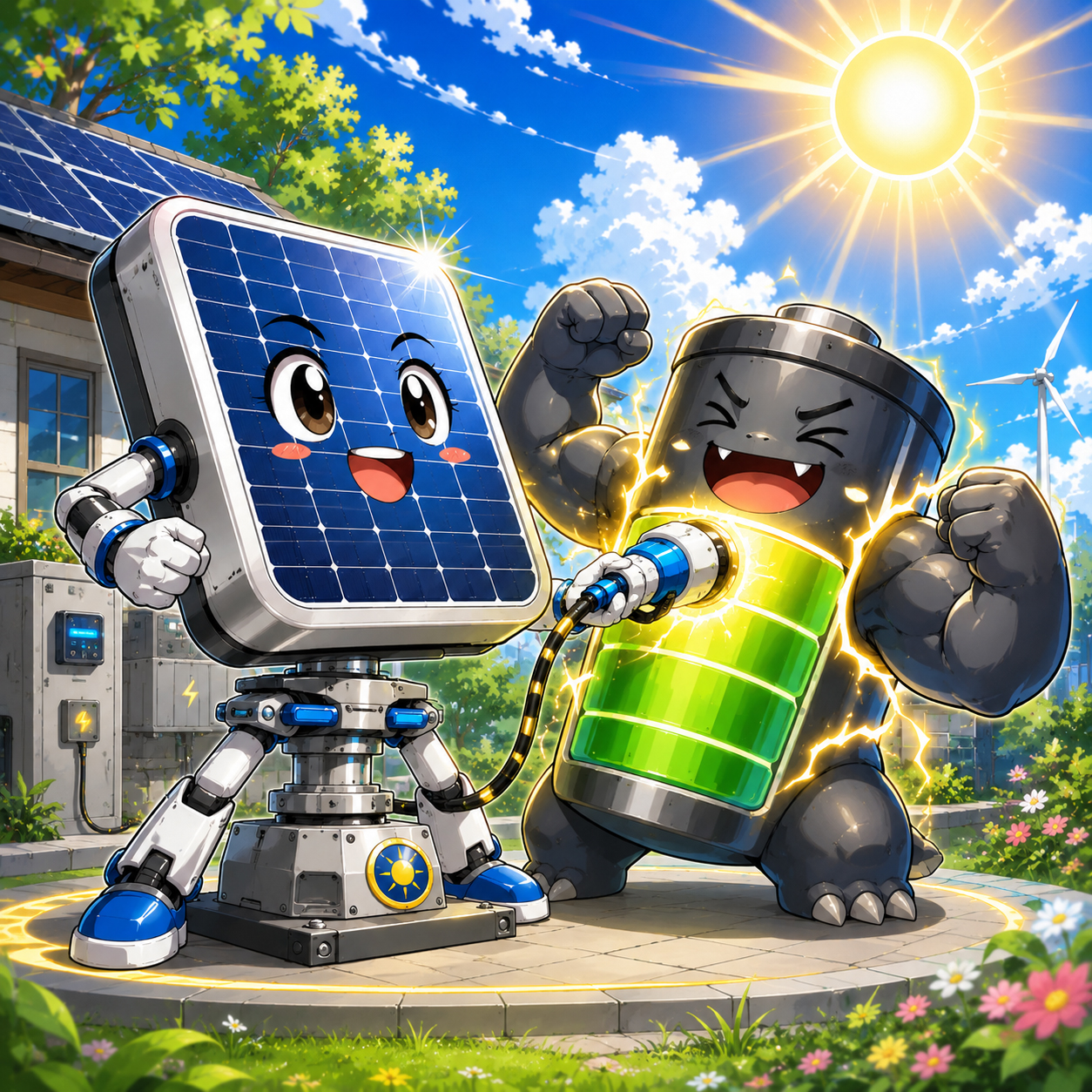
Battery Beast checks the evening load list: lights, refrigerator, communications, and maybe a gate controller.
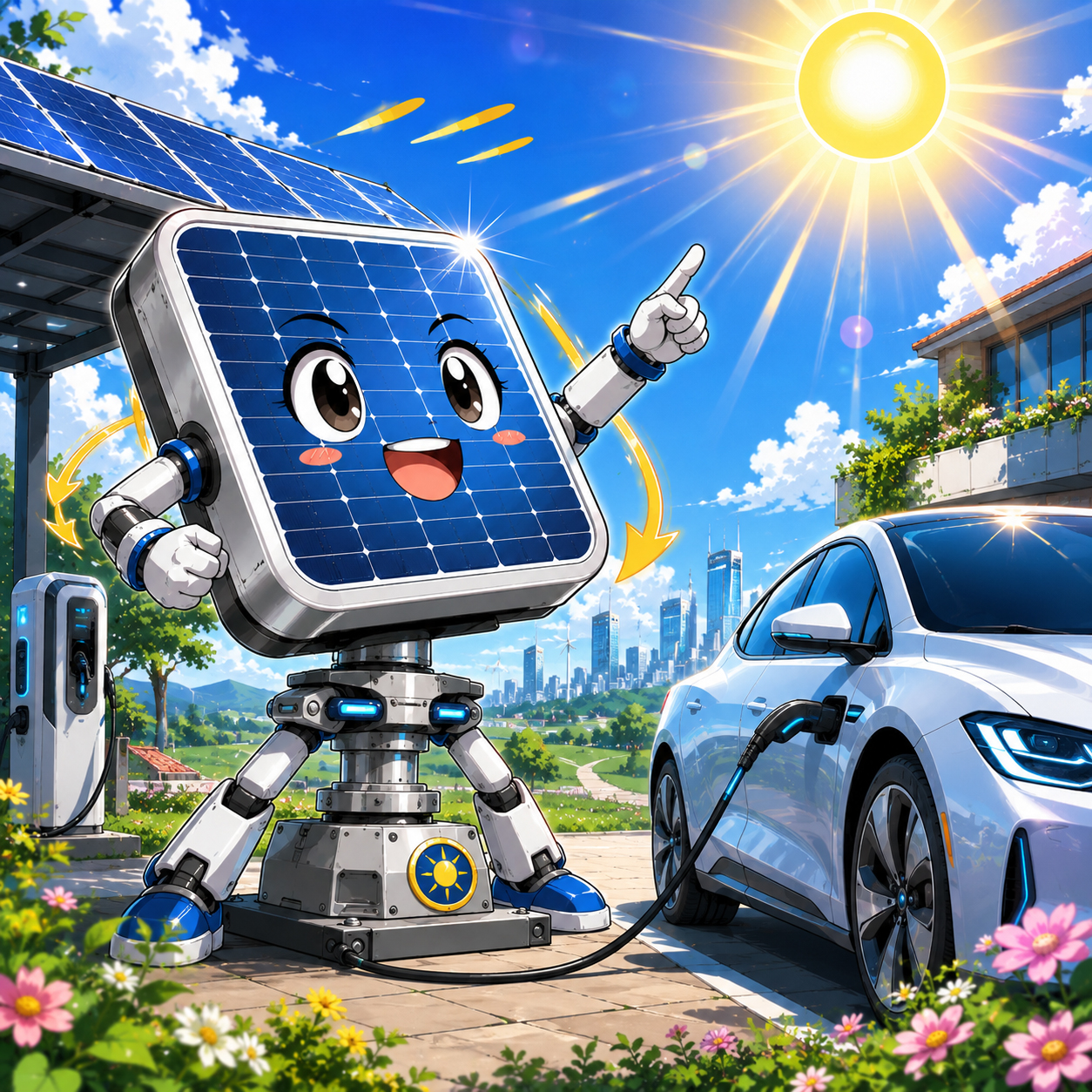
The car pulls in during the afternoon. Solar Pod Boy smiles. Then the charger asks for a number instead of a pose.

The professor draws three curves: fixed solar, tracking solar, and the actual load. He circles the place where afternoon production lines up with useful demand.
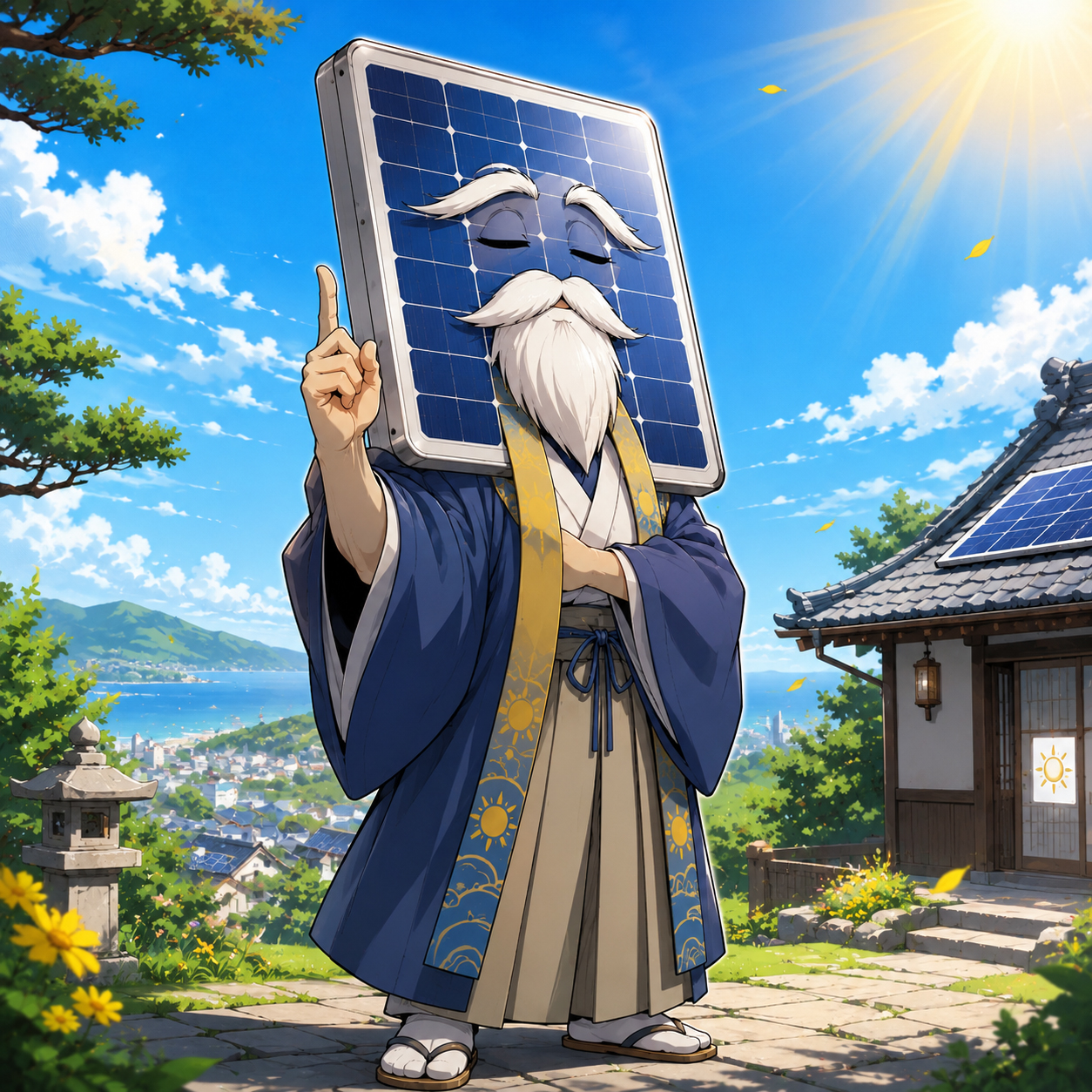
The old panel points to a larger fixed array. It has no motors, no stow logic, and no drama.
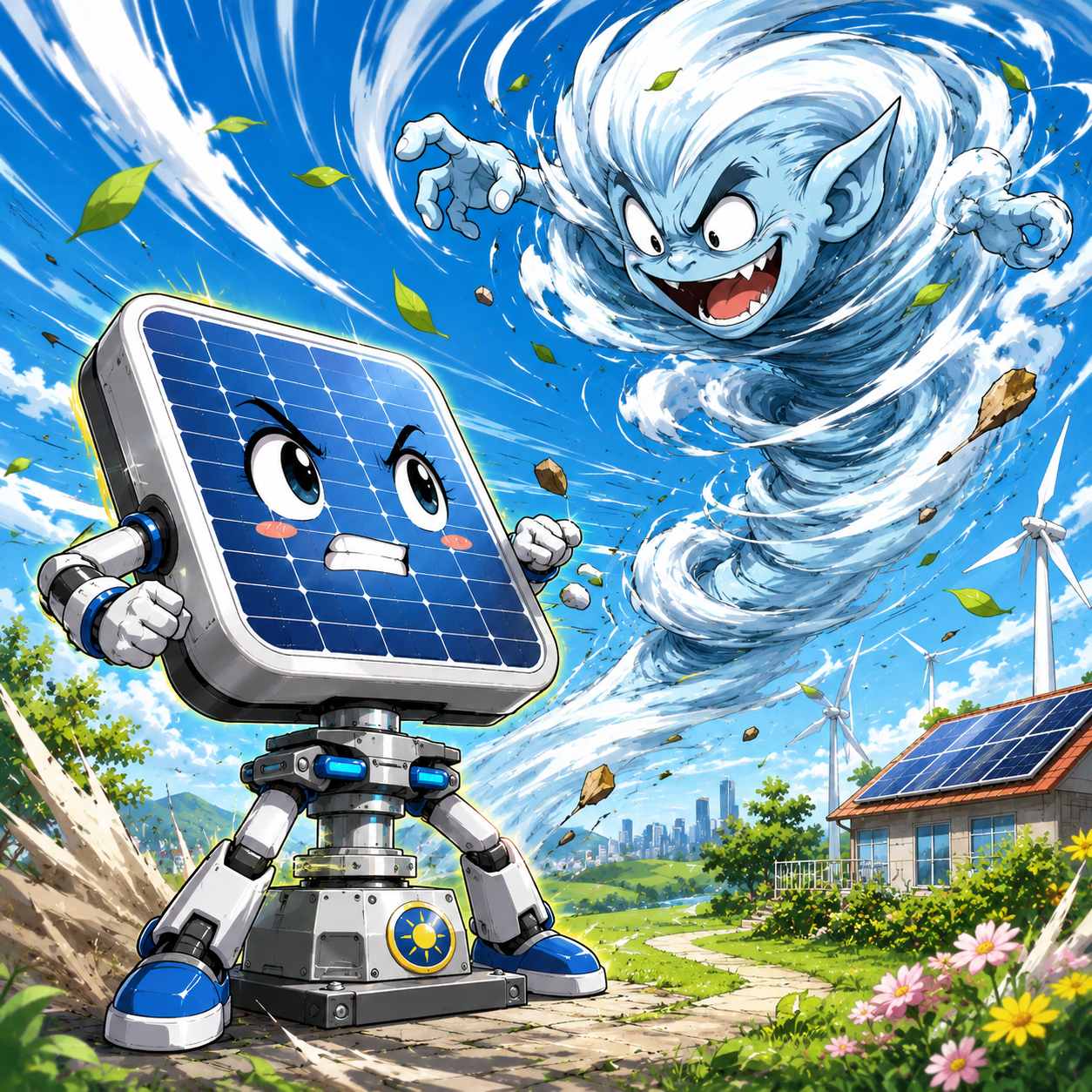
As Solar Pod Boy leans west, the Wind Goblin appears and asks whether the afternoon angle is also the safe wind angle.
Afternoon tracking can be useful when it helps avoid expensive evening power, charge batteries before night, support EV charging, or serve loads that happen late in the day.
The afternoon chase is a financial and operational question, not just a solar geometry question.
Afternoon tracking is strongest when late-day energy has clear value. If the project cannot prove that value, Fixed-Tilt Sensei probably wins again.
Solar Pod Boy now understands morning and afternoon value. Episode 4 asks the question every moving panel must answer: what happens when the wind attacks?
The story moves from economic timing to structural reality.
 Previous: Episode 2 — Morning Power Wake-Up
Next: Episode 4 — Wind Goblin Attacks
Read Tracking vs Fixed Solar
Previous: Episode 2 — Morning Power Wake-Up
Next: Episode 4 — Wind Goblin Attacks
Read Tracking vs Fixed Solar
This episode is an educational manga concept. Actual solar tracking, battery, EV, and peak-rate designs require qualified professionals, code compliance, permits, inspections, and accurate load modeling.